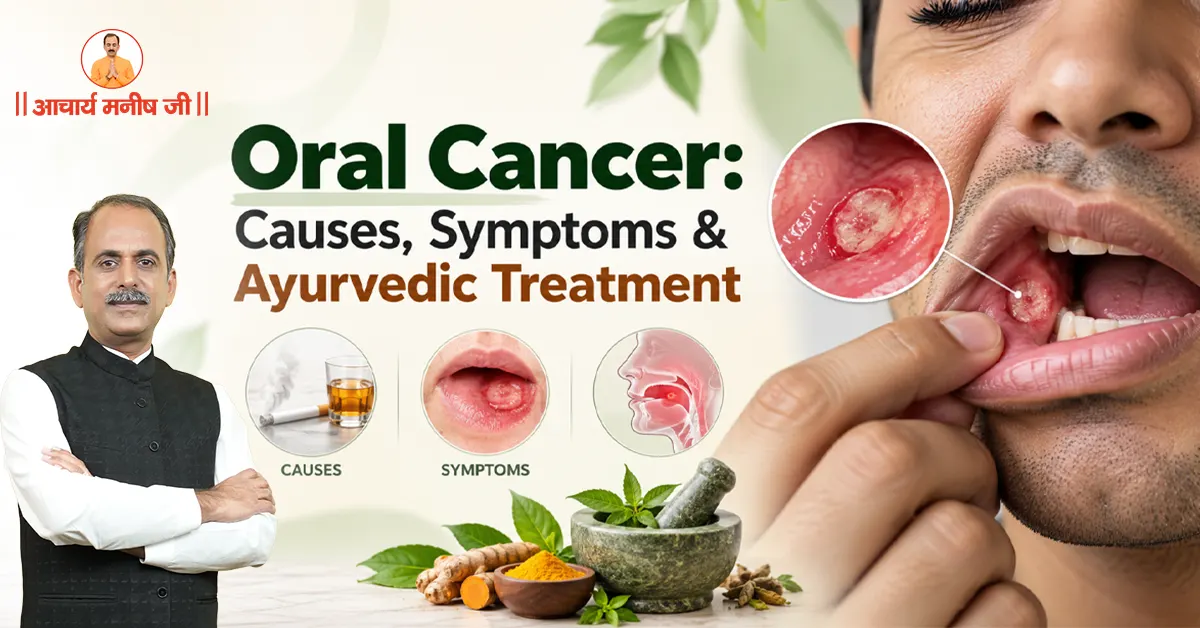

Your mouth often gives early signs when something is not right. A patch, sore or small lump can be an early sign. Noticing it in time makes care easier. Acharya Manish ji believes that true healing starts with the root cause. That is why oral cancer treatment in Ayurveda looks at the whole body, not just the mouth.
However, oral cancer is very common in India. A 2026 study based on GLOBOCAN 2022 data found 143,759 new cases in India in 2022. That is about one in every ten cancers in the country. Moreover, tobacco and supari use are responsible for around 70 to 80% of these cases. This blog explains the causes, the early signs, and how Ayurveda supports oral cancer care.
What Is Oral Cancer?
Oral cancer is a type of cancer that develops in the mouth. For example, it can affect the lips, tongue, gums, inner cheeks, and the roof or floor of the mouth.
It often starts as a small, harmless-looking change. The change may be a white patch (leukoplakia) or a red patch (erythroplakia). Similarly, some people get oral submucous fibrosis, where the mouth turns stiff. These precancers are not cancer yet, but they can turn into it over time. So, it helps to know which signs to watch for. Noticed a patch or sore in your mouth that isn’t healing? Talk to our experts and understand your concern.

Oral Cancer Symptoms You Shouldn’t Ignore
Oral cancer symptoms are easy to miss because they often start without pain.
-
A Mouth Ulcer That Doesn’t Heal
Most mouth ulcers heal in a week or two. However, an ulcer that stays beyond three weeks needs a check, because abnormal cells keep the area from healing.
-
White or Red Patches
White or red patches on the gums, tongue, or cheeks are common early signs. In particular, red patches carry a higher risk.
-
A Lump or Thick Area
Also, you may feel a lump or a thick, rough area in the mouth. Sometimes, a painless lump also appears in the neck, as the disease reaches nearby glands.
-
Pain, Numbness or Bleeding
Besides this, some people feel pain, burning or numbness in the mouth. Others notice bleeding without any injury, which points to damaged tissue.
-
Trouble Chewing, Swallowing or Speaking
Finally, as the growth gets bigger, chewing, swallowing or opening the mouth can become hard.
These signs often come from daily habits, so let’s look at the causes.
What Causes Oral Cancer?
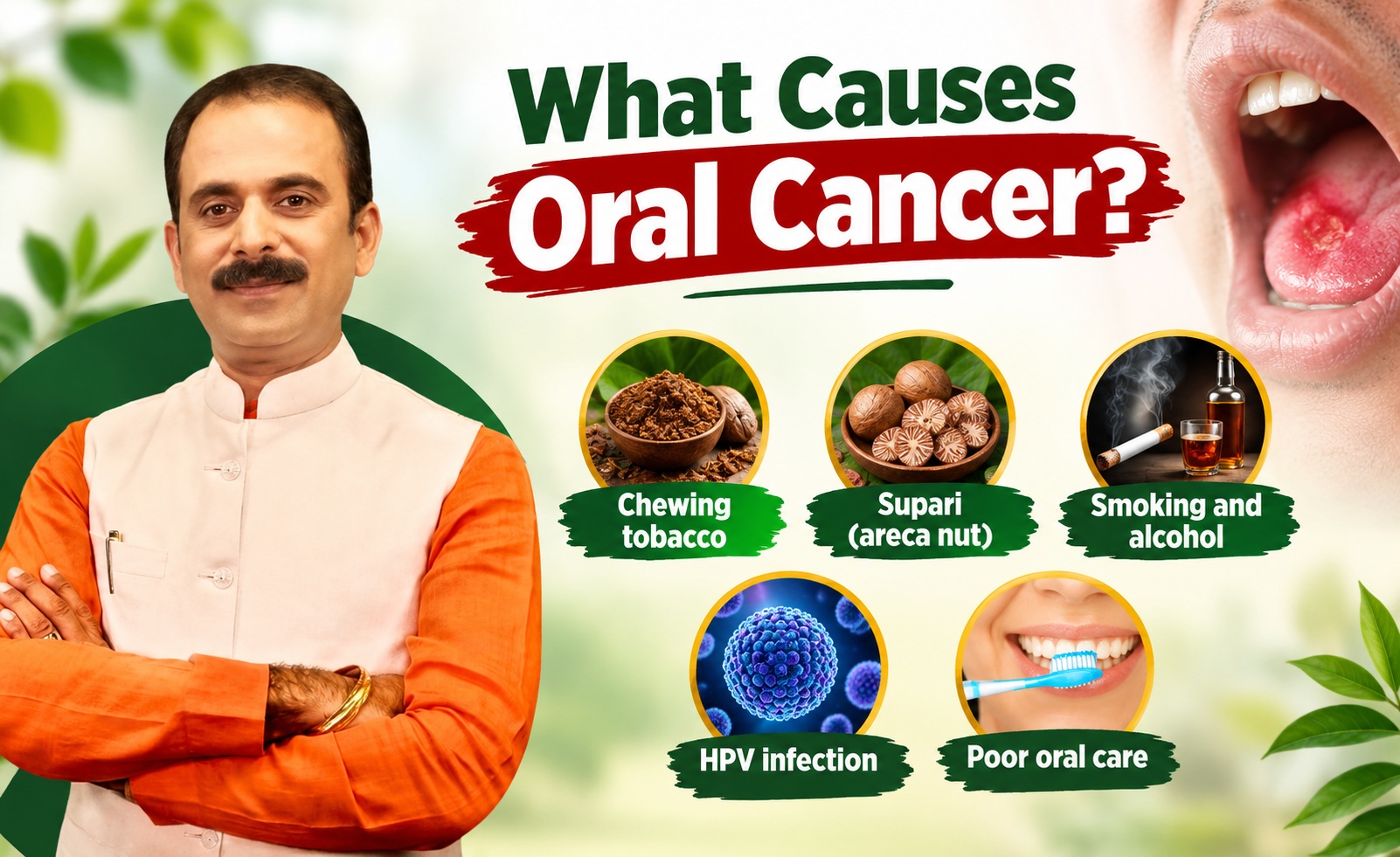
In fact, most oral cancers start from habits that harm the mouth over years.
- Chewing tobacco: Gutka, khaini and paan with tobacco keep harmful chemicals in the mouth for hours. As a result, they slowly damage the cells.
- Supari (areca nut): Supari can cause oral cancer even without tobacco. It also causes the stiff mouth condition called oral submucous fibrosis.
- Smoking and alcohol: Bidi and cigarette smoke harm the mouth lining. Alcohol weakens it further, so the risk rises sharply when people use both.
- HPV infection: This common virus can also cause some mouth and throat cancers.
- Poor oral care: Sharp, broken teeth or ill-fitting dentures can rub the same spot again and again. Poor oral hygiene adds to the risk.
Because the causes are clear, early checks can catch problems in time. Chewed tobacco for years and worried about your mouth? Speak to our experts for guidance.
Why Early Detection Matters
A doctor first looks carefully inside the mouth. Then, if a patch or sore looks unusual, the doctor does a biopsy. In this simple test, a lab checks a tiny piece of tissue to confirm the problem.
Above all, finding the disease early changes a lot. Early-stage oral cancer treatment is usually simpler with better chances of recovery. In a large screening trial in Kerala, people received simple visual mouth checks. Among tobacco and alcohol users, these checks lowered oral cancer deaths by about 34%.
Along with early checks, Ayurveda looks at the deeper imbalances behind the disease.
How Ayurveda Views Oral Cancer
Ayurveda calls abnormal growths Arbuda. Mouth diseases come under Mukha Roga. Hence, Ayurveda calls a tumour in the mouth Mukha Arbuda.
According to Ayurveda, an imbalance of Kapha and Pitta leads to Mukha Arbuda. Weak digestive fire or Agni, leads to the build-up of Ama, or toxins. Over time, habits like tobacco use also make this imbalance worse. Therefore, Ayurveda works to clear Ama, strengthen Agni and bring the body back into balance.
Furthermore, research supports some Ayurvedic herbs. In an Indian trial, 223 people with leukoplakia, a precancerous condition, took curcumin from turmeric for six months. About 67.5% of them showed improvement, compared with 55.3% on a placebo. The study also found no safety concerns. Still, each body responds in its own way, so care works best when it is personal.
Ayurvedic Oral Cancer Treatment: Acharya Manish Ji’s Approach
Instead of targeting one area, Ayurvedic mouth cancer treatment supports the whole body. Many families search for oral cancer ka ilaj or muh ke cancer ka ilaj that is natural and gentle. Acharya Manish ji’s approach rests on four pillars: Aahar (diet), Vihar (lifestyle), Shaman (herbs) and Shodhan (cleansing). Jeena Sikho HiiMS delivers his care plans through the following therapies.
A paste of neem, banyan, peepal and guava leaves, karela and raw turmeric goes on the soles of the feet. Ayurveda traditionally uses it to support natural cleansing and relaxation.
-
Cancer Detox Juice
This fresh juice blends leafy greens, raw turmeric, ginger, beetroot, and amla. It is rich in antioxidants and vitamin C. As a result, it supports nutrition and energy when eating feels hard.
-
Panchakarma
Similarly, Panchakarma is Ayurveda’s classic cleansing process. It aims to clear toxins, and the doctor chooses the procedure after an assessment.
-
Herbal Support
Herbs like Ashwagandha, Haldi, Neem and Tulsi support strength, immunity, and balance. However, doctors decide the herbs and doses for each patient.
-
pH-Balanced Diet
Patients eat fresh, soft, plant-based meals that are easy to chew and swallow. As a result, digestion stays light.
-
Mind and Body Healing
Yoga, pranayama and meditation help reduce stress and improve sleep. A calm mind also helps patients stay steady while healing.
Doctors make every plan after an assessment, and results can vary from person to person. This oral cancer treatment approach works alongside the patient’s ongoing care, not in place of it.
Protecting Your Mouth: Prevention and When to See a Doctor
Small daily choices can protect your mouth for years.
- Quit tobacco: This is the most powerful step as the mouth lining starts to recover once the damage stops.
- Check your mouth every month: Use a mirror to look for patches, sores or lumps.
- Visit a dentist twice a year: This is because dentists can spot early changes you may miss.
- Eat fresh fruits and vegetables: They give your body the nutrients it needs.
Above all, see a doctor if any sore, patch or lump lasts more than two weeks.
Conclusion
Oral cancer often begins with small signs like ulcers, patches, or lumps. In most cases, tobacco, supari, smoking and alcohol cause it. Early checks make a big difference. Meanwhile, Ayurveda sees the disease as an imbalance of Kapha, Pitta, Agni and Ama. Acharya Manish ji combines diet, herbs, cleansing, and lifestyle care in his approach. Together, these form a root-cause path for oral cancer treatment. Take the first step towards root-cause healing with Acharya Manish ji’s Ayurvedic guidance. Contact us today.

FAQs
Q1. Does early detection make oral cancer easier to treat?
Ans. Yes. Early-stage oral cancer is usually easier to treat with better chances of recovery. That is why regular mouth checks matter.
Q2. What is the Ayurvedic approach to mouth cancer treatment?
Ans. Ayurveda focuses on clearing toxins, improving digestion and restoring balance. It uses diet, herbs, Panchakarma and lifestyle care, planned for each person.
Q3. How does Ayurveda approach oral cancer ka ilaj?
Ans. It begins with an assessment of your body type and condition. Then doctors plan diet, herbs and therapies that support your overall health.
Q4. Can supari alone cause oral cancer?
Ans. Yes. Supari can harm the mouth lining even without tobacco. It is also a major cause of oral submucous fibrosis.
Q5. Which foods are good during oral cancer treatment?
Ans. Soft, fresh, plant-based foods are easy to eat especially during treatment. Fruits, vegetables, dals, and fresh juices support nutrition and energy.