
Most of us drink water throughout the day without giving much thought to what our kidneys actually need. Then comes a hot afternoon, a long day at work, a workout, or a severe case of illness, and suddenly the importance of hydration becomes much easier to notice.
But there is another question worth asking: are you drinking enough water for kidney health, or are you simply trying to finish a fixed number of glasses because someone told you to? The answer is not the same for everyone. Your activity, climate, body size, diet, age and health can all change your fluid needs.
Acharya Manish Ji also considers hydration within the larger picture of food, routine and daily habits. In this blog, you will learn how much water you may need, the signs of insufficient water intake, common mistakes, and when drinking more water may not be the right approach.
Why Water Is Important for Healthy Kidneys
Your kidneys work continuously to filter waste from the blood and help keep the body’s fluid and mineral balance within a healthy range. Water plays an important part in this process because the kidneys use it to produce urine, which carries dissolved waste out of the body.
When you take in an appropriate amount of fluid, your kidneys can produce urine without the body having to conserve as much water. When water intake stays minimal, urine can become more concentrated and you may pass urine less often. This does not mean that every kidney problem comes from drinking too little water, but hydration is still an important part of everyday kidney and urinary health.
There are also situations in which your body can lose fluid more quickly than usual. Hot weather, heavy exercise, fever, vomiting and diarrhoea can all increase fluid loss. If this continues for a long time or becomes severe, dehydration can become a genuine health concern.
How Much Water Do You Really Need Every Day?
There is no single amount of water that is right for every person, every day. That is one of the most useful things to understand when thinking about how much water for healthy kidneys you should drink.
Your water needs can change with the weather, your activity and even what is happening in your body that day. Someone working outdoors in hot weather may lose considerably more water through sweat than someone spending most of the day indoors. A person who exercises regularly may also need to consume more water than someone who is mostly sedentary.
Other factors are important as well, including:
- Body size and age
- Climate and temperature
- Physical activity and sweating
- The foods you eat
- Pregnancy
- Fever
- Vomiting or diarrhoea
- Certain medicines
- Existing health conditions
People with kidney, heart or liver conditions may have very different water requirements. Some may even be advised to limit fluids, so general hydration advice should never ignore an individual’s medical instructions.
-
Do You Really Need Eight Glasses of Water?
The familiar eight-glass rule is easy to remember, but it should not automatically be considered as a personal prescription. Your body does not work according to a universal hydration quota.
For a generally healthy person, thirst can be one useful signal that it is time to drink. At the same time, situations such as prolonged exercise, extreme heat or illness can change the picture, so common sense and individual circumstances still count.
-
Acharya Manish Ji’s Perspective on Water Intake
Acharya Manish Ji‘s teaching on water places importance on understanding natural thirst instead of forcing a fixed number of glasses or litres simply because it is a popular rule. The more general idea is to look at hydration alongside food, routine, activity and the individual’s circumstances rather than considering water intake as an unchanging habit.
7 Signs You May Not Be Drinking Enough Water
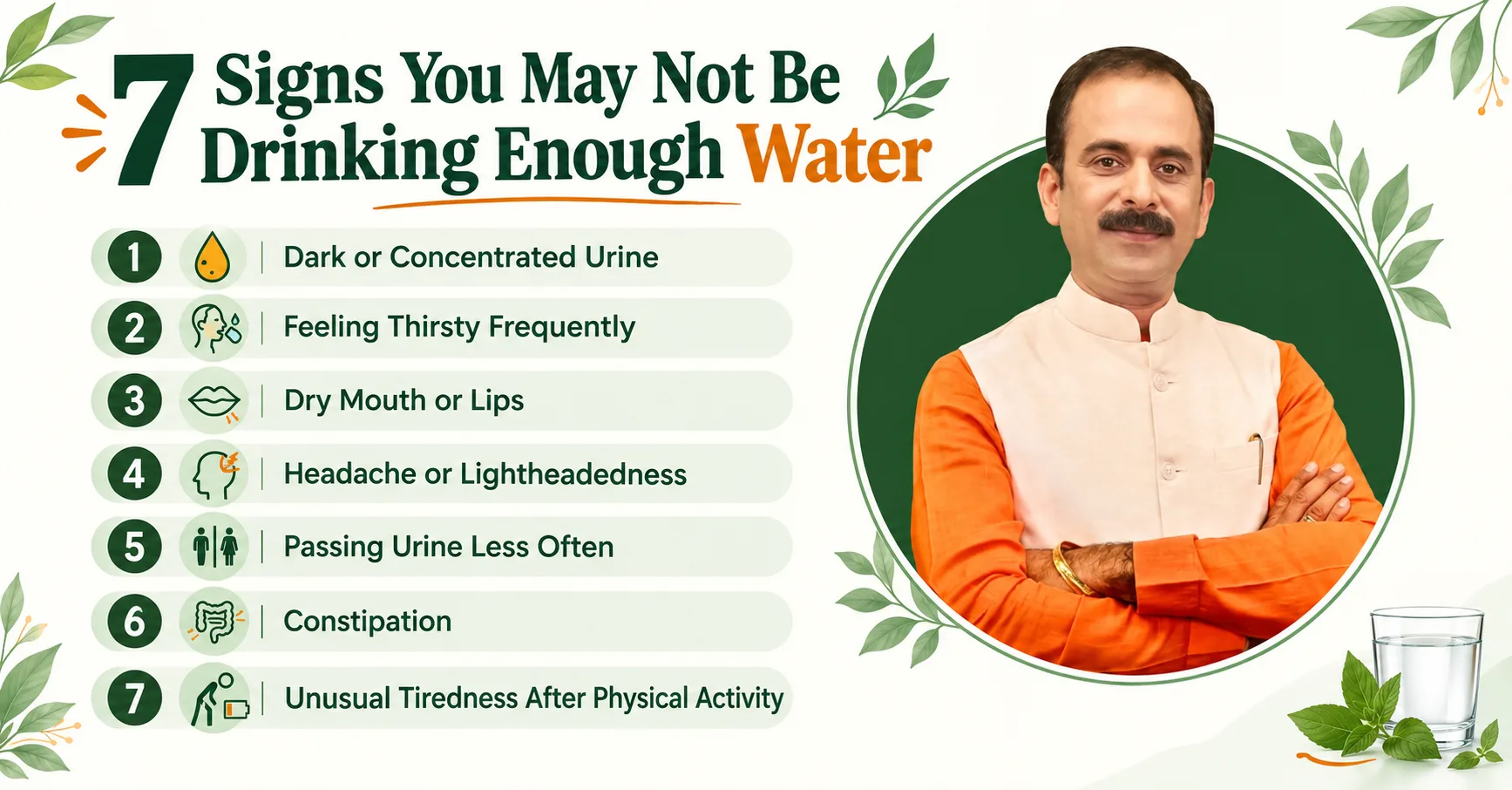
Your body can give you a few fairly noticeable clues when fluid intake has not kept pace with your needs. None of these signs, however, should be treated as a diagnosis on their own.
1. Dark or Concentrated Urine
When urine becomes darker than usual, particularly alongside thirst or reduced urination, it can be a sign that the urine is more concentrated.
2. Feeling Thirsty Frequently
Thirst is one of the body’s natural signals that fluid intake may be needed, although thirst alone does not tell you exactly how much water to drink.
3. Dry Mouth or Lips
A noticeably dry mouth or dry cracked lips can occur when your body is short of water, especially in hot or dry conditions.
4. Headache or Lightheadedness
Some people experience headaches or lightheadedness when they have not taken in enough water, although these symptoms have many other possible causes.
5. Passing Urine Less Often
A noticeable reduction in how frequently you urinate can happen when the body is conserving water.
6. Constipation
Not getting enough water can also contribute to constipation, particularly when your diet is also low in fibre.
7. Unusual Tiredness After Physical Activity
If you feel unusually drained after exercise or time spent in the heat, fluid loss may be one factor worth considering.
These signs still do not prove dehydration by themselves. If symptoms are persistent, severe or unusual for you, it is better to look for the actual cause instead of assuming that you simply need another glass of water. Contact us today for more details.

Can Dehydration Affect Kidney Health?
Significant dehydration can reduce urine output and make urine more concentrated. This may happen after heavy sweating, prolonged exercise, hot weather, vomiting or diarrhoea.
Proper water intake can also help keep urine less concentrated, which is relevant to kidney stone prevention. However, kidney stones and other kidney problems can have several causes, so water alone is not a complete solution.
This is why water for kidney health should be viewed as one part of overall kidney care. If you already have kidney disease, do not increase your fluid intake without medical advice. Hydration is important for kidney health, but “more water” is not automatically the answer to every kidney problem.
Is Drinking More Water Always Better for Your Kidneys?
Drinking more water is not always better. Your body needs an appropriate amount, and consuming excessive amounts in a short time can disturb the body’s water and electrolyte balance.
People with certain kidney, heart or liver conditions may also need to limit their water intake. Medicines, urine output and overall health can further affect how much water is appropriate.
So, instead of thinking, “If some water is good, more must be better,” a better question is, “What amount is appropriate for me?”
What Colour Should Your Urine Be?
Urine colour can offer a simple clue about hydration, although it cannot tell you everything about your health. Such as pale yellow urine is commonly associated with adequate hydration, while darker urine may occur when it becomes more concentrated.
Urine colour can also change because of foods, vitamins, supplements and certain medicines, so one unusual change does not necessarily mean something is wrong.
What Does Dark Urine Usually Mean?
Dark urine may indicate concentrated urine, especially when you have been drinking less water or feeling thirsty. However, unusual changes, particularly with blood in the urine, pain, swelling or major changes in urination, should be medically evaluated rather than explained only by low water intake.
The Right Way to Stay Hydrated Throughout the Day
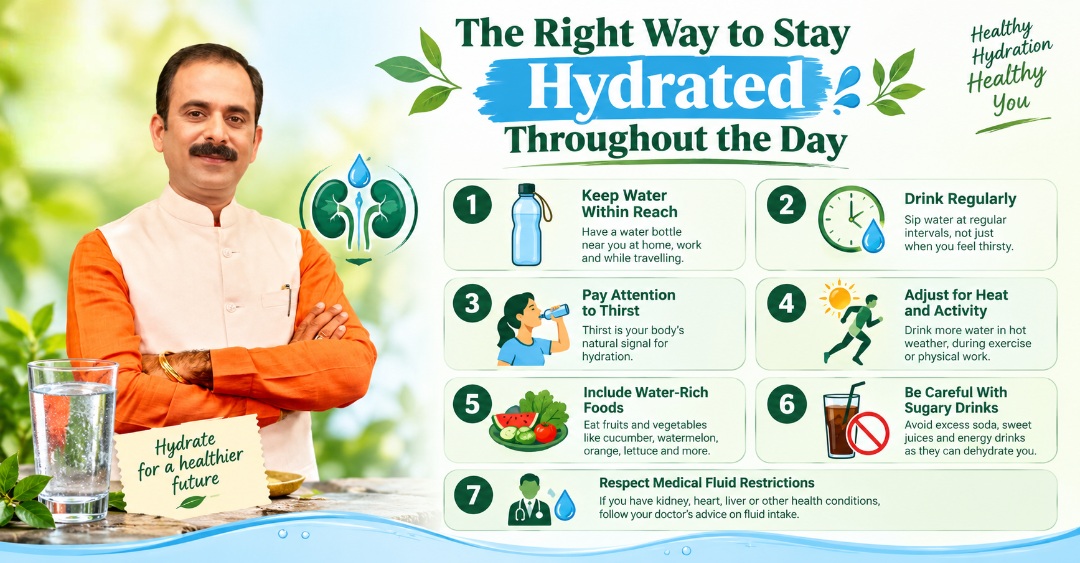
Good hydration does not have to become another task that you constantly measure and monitor. A few practical habits can make it easier to respond to your body’s needs without turning water into a numbers game.
1. Keep Water Within Reach
Keep a bottle nearby when you are working, travelling or spending time outdoors. When water is easy to access, you are less likely to realise at the end of the day that you barely drank anything.
2. Drink Regularly
Rather than waiting until you are extremely thirsty and then drinking a large amount at once, make drinking water a normal part of your day.
3. Pay Attention to Thirst
Thirst is a useful body signal for many healthy adults, but it should be considered alongside the circumstances. Long periods of exercise, extreme heat and illness can change how quickly you lose water.
4. Adjust for Heat and Activity
If you are sweating more than usual, your water needs may increase. Hot Indian summers, outdoor work and intense exercise can all make a noticeable difference.
5. Include Water-Rich Foods
Fresh fruits and vegetables can contribute to your overall water intake. They also add variety to a daily diet instead of making every bit of hydration come from a glass or bottle.
6. Be Careful With Sugary Drinks
Sweetened drinks can add a significant amount of sugar to the diet. Water can remain the simpler everyday choice for hydration.
7. Respect Medical Fluid Restrictions
If your doctor or healthcare team has asked you to limit fluids, follow that advice instead of using general kidney health tips to decide your intake.
Can Alkaline Water or the INJK Water Device Be Part of a Hydration Routine?
For people interested in different approaches to drinking water, Acharya Manish Ji also addresses the INJK water device and alkaline water as part of a daily hydration routine.
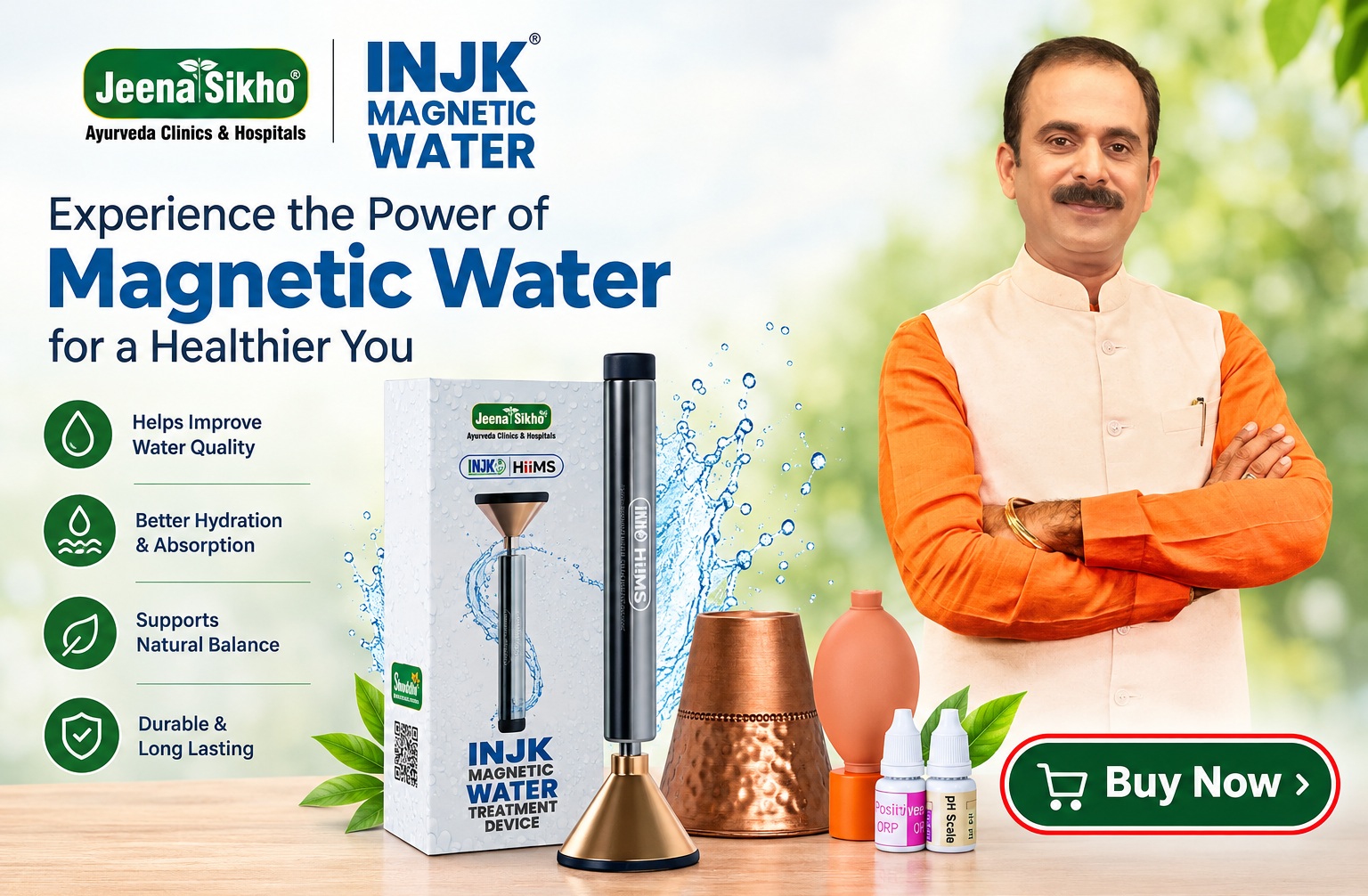
The INJK device is a water device that uses components including magnets, pebbles, silver and copper, and presents the resulting water as alkaline. It can be a convenient home, outdoor and workplace use option that does not require electricity.
Common Hydration Mistakes That May Affect Your Daily Health
Sometimes the problem is not that people do not know water is important. It is that they follow hydration advice without considering their own circumstances.
Here are some common mistakes worth avoiding:
- Drinking only after becoming extremely thirsty
- Replacing most of your water intake with sugary beverages
- Forgetting to drink during hot weather
- Drinking a very large amount of water in a short period
- Assuming more water automatically means healthier kidneys
- Ignoring persistent changes in urination
- Following generic hydration advice despite having a prescribed fluid restriction
- Treating every headache, tired feeling or dizzy spell as dehydration
- Assuming urine colour alone can tell you everything about your health
A sensible hydration routine should fit into your actual day. It should account for your activity, the weather, your food and your health rather than forcing you to chase a particular number from morning to night.
The goal is not to win a water-drinking contest. It is to avoid both extremes: routinely taking in too little water and assuming that more is always better.
Acharya Manish Ji’s Approach to Water, Food and Daily Health
Acharya Manish Ji looks at hydration as one part of a person’s daily routine rather than something that should be considered separately from food, digestion, activity and lifestyle. Instead of focusing only on a fixed number of glasses, his approach encourages people to consider their thirst, daily activity, weather and individual health needs.
The same idea extends to an Ayurveda-based wellness routine, where food choices, movement, digestion and a consistent daily schedule are considered alongside hydration.
At the same time, a holistic approach should not mean ignoring medical evaluation. Blood in urine, persistent swelling, severe pain, major changes in urination or an existing kidney condition require appropriate professional attention.
Healthy habits and medical care do not have to compete with each other. In many situations, understanding both gives a person a clearer picture of what to do next.
When Should You Speak to a Healthcare Professional?
Not every change in thirst or urine colour is a cause for concern, but some symptoms should not be dismissed as simply needing more water.
Seek medical advice if you notice:
- Very little or no urine
- Blood in the urine
- Persistent swelling
- Severe flank or back pain
- Ongoing vomiting or diarrhoea with signs of dehydration
- Severe dizziness or confusion
- Persistent changes in urination
If you already have kidney disease, do not change your fluid intake based only on general hydration advice. Your needs may depend on your kidney function, medicines, urine output and other health factors.
Conclusion
Healthy hydration is not about forcing yourself to finish a fixed number of glasses every day. It is about understanding your body’s needs, noticing changes in thirst and urination, adjusting to heat and activity, and remembering that some health conditions require a different fluid plan.
This is the practical meaning of water for kidney health: enough fluid for your individual needs, without assuming that more is always better. Acharya Manish Ji’s broader approach also places water alongside food, routine, digestion, movement, and overall wellness.
If you have persistent urinary changes, swelling, severe pain, very low urine output, or an existing kidney condition, do not rely on general hydration advice alone. You can opt for a consultation booking with expert doctors from Acharya Manish ji’s team to discuss your health concerns and understand what approach may be appropriate for your individual condition.

FAQs
Q1: How much water should I drink for healthy kidneys?
There is no fixed amount for everyone. Your needs depend on factors such as activity, climate, age, and health.
Q2: Can drinking water help keep the kidneys healthy?
Proper hydration helps maintain normal urine production and fluid balance, but kidney health depends on several other factors too.
Q3: Is dark urine always a sign of dehydration?
Not always. Food, supplements and medicines can also change urine colour.
Q4: Can dehydration affect the kidneys?
Severe or prolonged dehydration can reduce urine output and make urine more concentrated.
Q5: Is drinking more water always better for the kidneys?
No. Excessive water intake can also be harmful, and some people need to restrict fluids.
Q6: Can drinking water help prevent kidney stones?
Adequate fluid intake can help keep urine less concentrated and may lower the chance of some kidney stones.
Q7: Should people with kidney disease drink more water?
Not necessarily. Water needs should be decided according to the person’s condition and medical advice.
Q8: Is drinking water before bed good for the kidneys?
There is no general need to drink extra water before bed specifically for kidney health.
Q9: What are the early signs of dehydration?
Thirst, darker urine, dry mouth, less frequent urination, headache and unusual tiredness are some common signs.