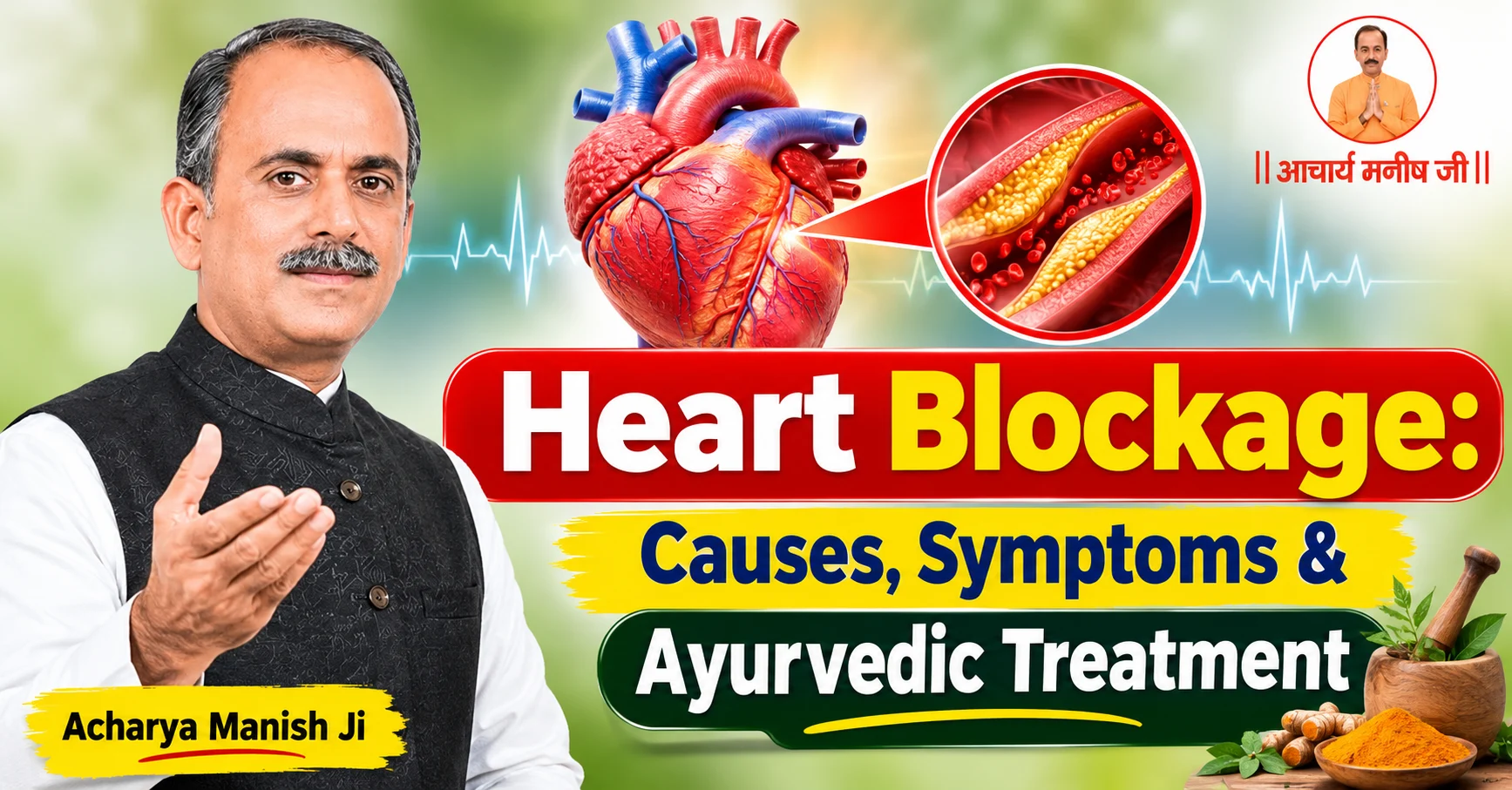

Heart blockage often builds silently over many years. A person may feel well until an artery narrows badly, so early awareness matters. Acharya Manish Ji often reminds people that the heart gives small signals long before a major problem, and learning to notice them is the first step.
A systematic review in the Indian Heart Journal, covering studies from 1969 to 2012, found coronary artery disease in 2.5% to 12.6% of people in urban areas and 1.4% to 4.6% in rural areas.
This blog explains the early warning signs of heart blockage, the causes, how the heart is checked, and Acharya Manish Ji’s Ayurvedic approach to heart health.
What Is Heart Blockage? Understanding It Through Acharya Manish’s Lens
The arteries carry blood to the heart muscle. Over time, fatty deposits can build up on the artery walls and make the path narrow. As a result, less blood and oxygen reach the heart. As the narrowing increases, the heart has to work harder to perform the same function. The early stage, which rarely causes pain, often goes unnoticed for years.
Ayurveda describes heart disorders as Hridroga. It explains blockage as Srotorodha, which means obstruction in the channels (Srotas) that carry nourishment. Acharya Manish Ji links this condition to weak digestion, a buildup of Ama (undigested waste), and daily habits. So he looks at the whole body and not only at the heart.
Want to understand your heart health better? Connect with Acharya Manish Ji’s team.
Heart Blockage Symptoms: 5 Early Warning Signs
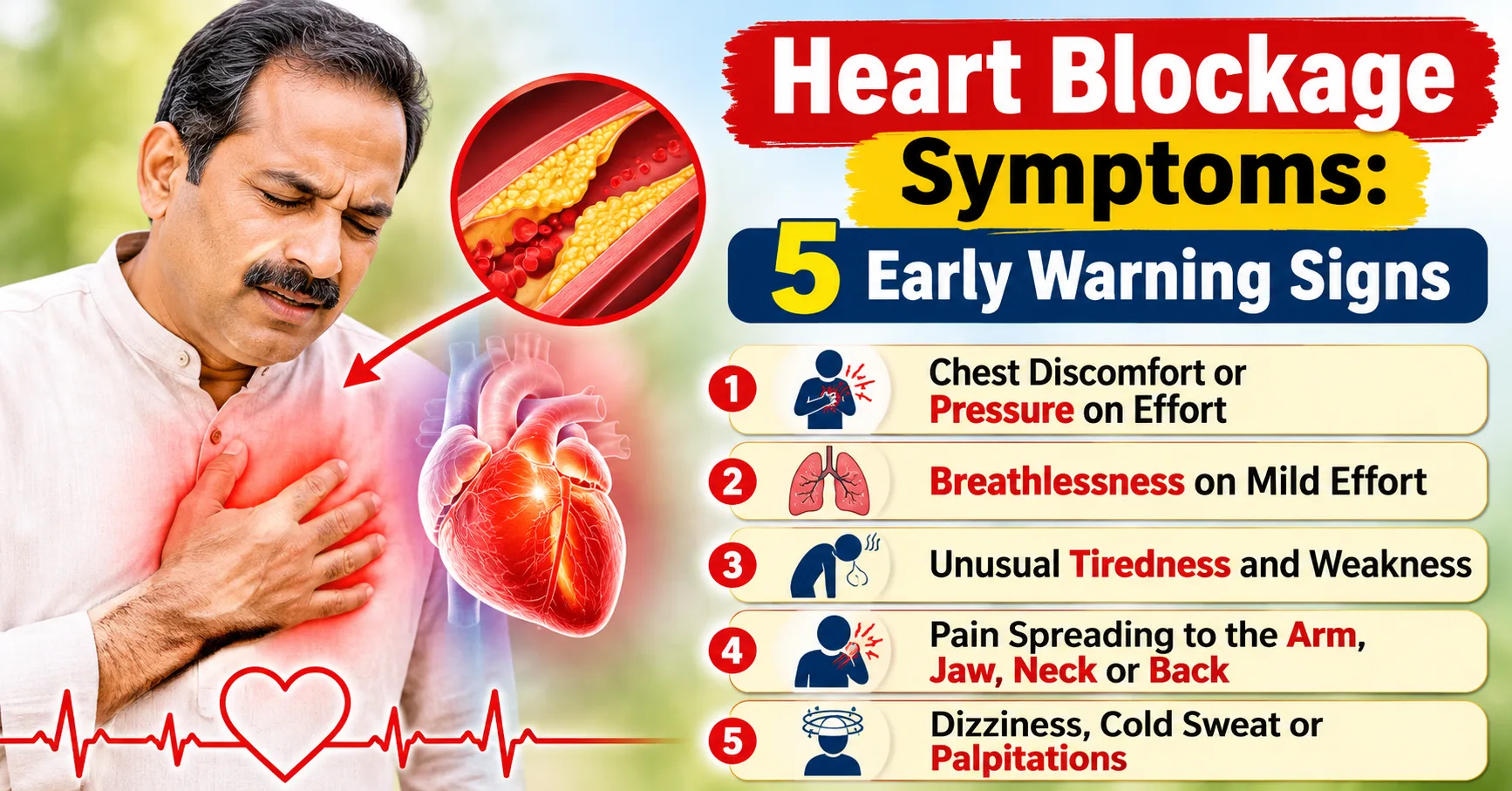
Early heart blockage symptoms are easy to miss because they look like tiredness or acidity. Heart blockage ke lakshan often appear first during effort, when the heart needs more blood. These are the heart blockage ke 5 early warning signs to know.
1. Chest Discomfort or Pressure on Effort
Many people feel pressure, tightness or heaviness in the chest while walking fast or climbing stairs. It often eases with rest. This happens because a narrowed artery cannot send enough blood when the heart works harder. However, people often call it gas, so it gets ignored. Chest discomfort that returns with the same effort deserves a proper check.
2. Breathlessness on Mild Effort
Getting out of breath during tasks that used to be easy is a common early sign. For example, climbing one floor may feel tiring. The heart struggles to pump enough blood, so the body asks for more air. If this happens more often than before, it is a sign to notice.
3. Unusual Tiredness and Weakness
Constant tiredness that rest does not fix deserves attention. Some people, including many women, feel mainly tired and weak, with no chest pain at all. In addition, the tiredness may grow slowly, so it is easy to blame work or age. A steady drop in energy over weeks is a better clue than one tired day.
4. Pain Spreading to the Arm, Jaw, Neck or Back
Discomfort in the chest may spread to the left arm, shoulder, jaw, neck, or back. Because the pain sits away from the heart, people often blame muscles or teeth. If it comes with effort and eases with rest, it needs a proper check. The pain may also feel like a dull ache or a burning sensation.
5. Dizziness, Cold Sweat or Palpitations
When the heart gets less blood, a person may feel dizzy, sweat without heat, or feel the heartbeat race or skip. A single episode may have another cause. However, signs that return again and again need attention.
These signs overlap with common problems, so a proper check is the safest next step.
How Heart Blockage Is Checked and When to Get Help Immediately
Symptoms alone cannot confirm a blockage. A doctor may advise an ECG, a lipid profile, a treadmill test, or an echocardiogram. Angiography is used when the doctor needs a clear view of the arteries. People with diabetes, high blood pressure or a family history of heart disease, or those above 40, may ask their doctor about regular heart check-ups.
However, some signs need emergency care at once. Seek immediate medical help for sudden or severe chest pain, pain spreading to the arm or jaw, cold sweat or fainting. Do not wait to see if it settles.
Heart Blockage Causes: Why the Arteries Narrow
Heart blockage causes build-up over years. These are the main ones:
- High cholesterol and heavy diet: Too much oily, fried, and processed food raises the fats in the blood. These fats can then settle on the artery walls.
- High blood pressure: Constant high pressure damages the artery lining, so deposits stick more easily.
- Diabetes: High blood sugar over a long time harms the blood vessels.
- Tobacco: Smoking damages the artery walls and makes the blood more likely to clot.
- Low activity and weight gain: Sitting for long hours slows circulation and adds load on the heart.
- Stress and poor sleep: Long-term stress raises blood pressure and disturbs daily habits.
- Family history and age: A family history raises the risk and arteries stiffen with age.
Often, more than one cause is present at the same time, and they add to each other. Most of these causes sit in daily routine, so habits are the best place to begin.
Everyday Habits for a Healthy Heart
Small habits protect the heart over time. They are simple, so they fit most routines.
- Keep salt and fried food low. Choose fresh, home-cooked meals most days.
- Walk every day. About 30 minutes of brisk walking keeps the circulation active.
- Sleep on time. A fixed sleep time of 7 to 8 hours helps the body recover.
- Avoid tobacco and limit alcohol. Both strain the arteries.
- Check blood pressure, sugar, and cholesterol. Regular tests catch changes early.
Each habit is small. Together, they ease the daily burden on the heart. Regular check-ups also tie these habits together, because they show how the body responds.
Looking for a heart-friendly routine that fits your day? Talk to Acharya Manish Ji’s team.
The Ayurvedic View of Heart Blockage
Daily habits shape the heart, and Ayurveda explains why. It describes heart blockage through Hridroga and Srotorodha. The Rasavaha and Pranavaha Srotas carry nourishment and vital energy to the heart. When Ama builds up and Vata and Kapha lose balance, these channels can narrow.
Ayurveda points to heavy, oily food, an irregular routine, daytime sleep and constant worry (Chinta) as common triggers. Acharya Manish Ji adds long-term stress and wrong food habits. Therefore, Ayurveda looks at diet, routine and the mind together.
Have questions about Ayurvedic care for the heart? Reach out to Acharya Manish Ji’s team.
Acharya Manish’s Approach to Heart Health
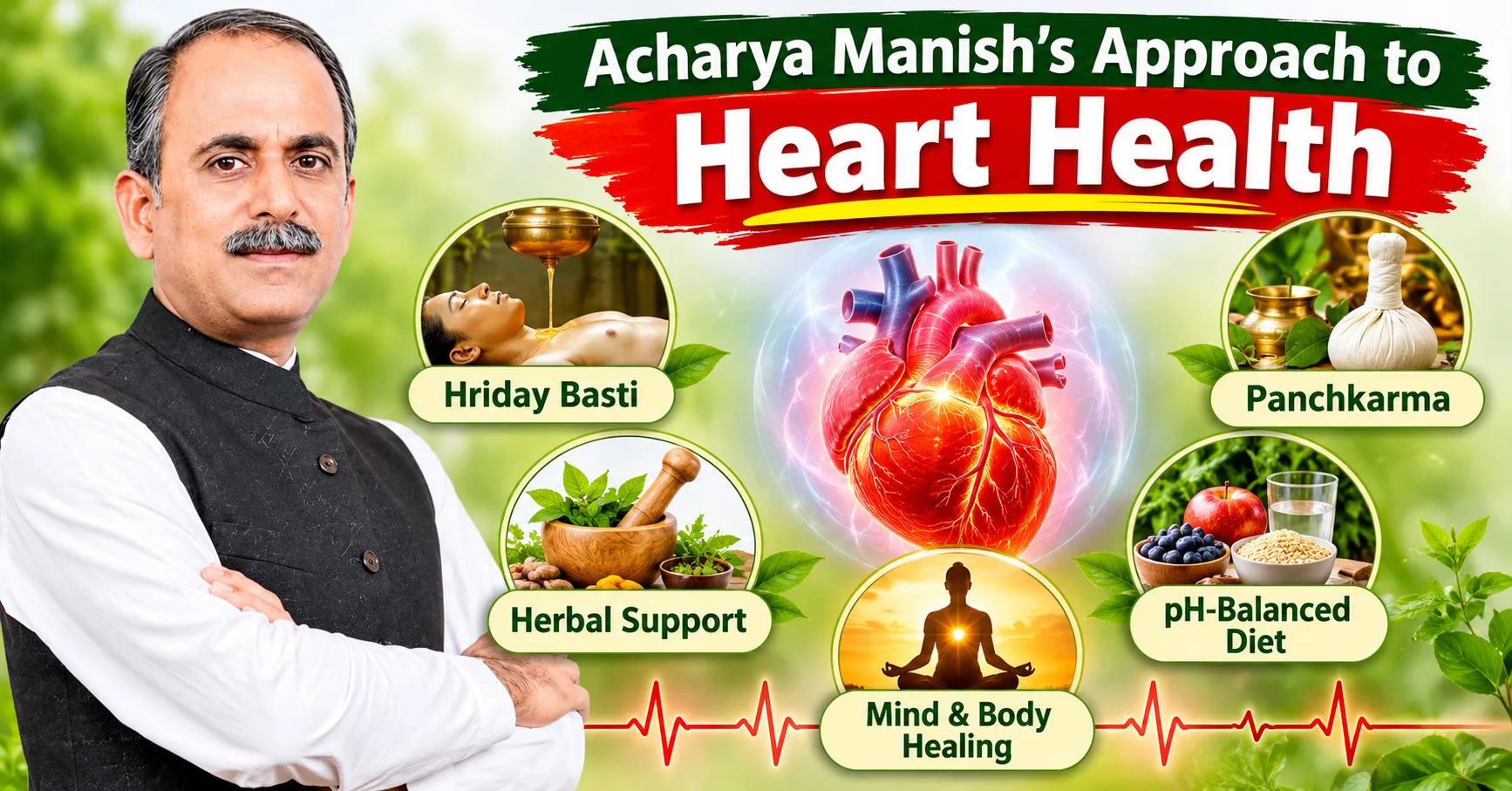
Acharya Manish Ji works on the root cause. His approach looks at digestion, Ama, the channels, and the habits behind them. Each plan is set after a proper assessment, so it fits the person and not just the condition. It includes the following parts.
Hriday Basti
Hriday Basti is a traditional Ayurvedic therapy for the chest region. Warm, medicated oil is held over the chest in a small ring of dough for a set time. It is traditionally used to relax the area and support heart care. The doctor decides the number of sittings after assessing the person.
Panchkarma
Panchkarma is the cleansing part of Ayurveda. Therapies such as Virechana and Basti are chosen as per the person’s health status. In this way, the body is prepared for the other parts of the plan. A doctor reviews the person’s strength and medical history before any therapy.
Herbal Support
Arjuna bark is traditionally used for the heart. A 1994 before-and-after study of 20 patients gave Arjuna bark powder for 3 months. In the 15 patients with stable angina, anginal episodes fell by 50%. A trained Ayurvedic doctor chooses the herbs and the dose for each person.
pH-Balanced Diet
The pH-balanced diet is built around fresh fruits, vegetables, and light home-cooked meals, including millets. Salt and fried food are kept low, so the meals are easy to digest and gentle on the heart. Late-night meals and processed food are also avoided.
Mind & Body Healing
Keep a fixed sleep time, move lightly every day, and give time to yoga, pranayama or meditation. Calm habits ease the stress that often goes along with heart problems. In addition, a calm mind helps the person stay regular with the other parts of the plan.
Ready to take the next step for your heart? Speak with Acharya Manish Ji’s team.
Conclusion
Heart blockage often stays silent until it grows, so early attention makes a real difference. Acharya Manish Ji believes in a simple approach. The body gives small signals first, such as chest pressure on effort, breathlessness, or unusual tiredness, and the root lies in daily habits, digestion and the mind. Listening to these signals early and caring for the whole person is the core of his approach.
Understand your heart health with personal guidance from Acharya Manish Ji and his team. Connect with his Ayurvedic expert, share your concerns and get a plan that fits your routine.
FAQs
1. What are the early symptoms of heart blockage?
Common early signs are chest pressure on effort, breathlessness on mild effort and unusual tiredness. Some people also feel pain in the arm, jaw, or back.
2. What causes heart blockage?
Fatty deposits narrow the arteries over time. High cholesterol, high blood pressure, diabetes, tobacco, low activity and stress are common causes.
3. Can heart blockage happen without symptoms?
Yes. In the early stage, it often causes no pain. This is why regular check-ups matter, especially with a family history.
4. How does Ayurveda look at heart blockage?
Ayurveda calls it Hridroga and links it to obstruction in the body’s channels, weak digestion and daily habits. It looks at diet, routine, and the mind together.
5. How does Acharya Manish Ji approach heart health?
He works on the root cause through Hriday Basti, Panchakarma, herbal support, a pH-balanced diet, and Mind & Body Healing. Each plan is personal.