
A burning feeling after a heavy meal is something most people know well. But when the burning keeps coming back, it may point to something more lasting. That is why understanding acidity vs GERD matters. Acharya Manish Ji explains both through the lens of digestion and daily habits.
A community study from Vellore, Tamil Nadu surveyed 6,174 people. It found that 8.2% had GERD symptoms, and about one in three of them needed medicine every day. This blog explains how acidity and GERD differ, what causes them and how Ayurveda approaches them.
Acidity and GERD: What Happens Inside Your Stomach
Your stomach makes acid to break down food, which is normal. Problems start only when acid builds up or moves to the wrong place.
- Acidity happens when the stomach makes more acid than usual. As a result, you feel a short burning sensation in the upper stomach.
- Acid reflux happens when this acid flows back into the food pipe. Normally, a ring of muscle at the bottom of the food pipe blocks it. When this ring stays loose, acid slips upward.
- GERD (gastroesophageal reflux disease) is reflux that keeps happening, usually twice a week or more. Over time, it irritates the lining of the food pipe.
Because both share many signs, comparing them side by side can be helpful.

Acidity vs GERD: How to Tell the Difference
The biggest clue in acidity vs GERD is how often the burning shows up. Here is a quick comparison.
| Acidity | GERD | |
| How often | Once in a while | Twice a week or more |
| How long it lasts | A few hours | Keeps returning for weeks or months |
| Common triggers | Spicy food, overeating, skipped meals | Lying down after meals, late dinners, extra weight |
| At night | Rarely a problem | Often worse when lying down |
Common Acidity Symptoms
Acidity symptoms usually show up soon after eating. You may feel burning in the upper stomach or chest, along with sour burps and a heavy feeling. However these signs often fade once the meal settles.
GERD Symptoms That Go Beyond Acidity
GERD symptoms last longer and reach further up. Frequent heartburn is the main sign. Many people also taste sour liquid coming back into the mouth.
Because acid reaches the throat, it can cause a dry cough or a hoarse voice. Some people feel a lump in the throat. Symptoms also tend to worsen at night.
So look for a pattern, not a single bad day. Burning twice a week for several weeks, or needing antacids often, points toward GERD.
Did you know? In the Vellore study, reflux symptoms were more than twice as common in cities (11.1%) as in villages (5.1%).
What Causes Acidity and GERD?
-
Acidity Causes
Most acidity causes come from daily habits. Spicy and oily food pushes the stomach to make more acid. Skipping meals, tea, coffee, alcohol, smoking and stress add to the load.
-
GERD Causes
GERD causes are linked to the loose ring of muscle described earlier. Extra weight around the stomach presses upward and forces acid back. Lying down right after meals and pregnancy have a similar effect. In some people, part of the stomach pushes up into the chest, which doctors call a hiatal hernia.
Acharya Manish Ji on the Ayurvedic View of Acidity and GERD
Ayurveda calls this problem Amlapitta. “Amla” means sour, and “Pitta” is the dosha that controls heat and digestion. When Pitta rises, the stomach turns too hot and sour. The upward type, Urdhvaga Amlapitta, closely matches GERD.
According to Acharya Manish Ji, the root lies in weak Agni, or digestive fire. When Agni is weak, food does not digest fully. It leaves behind Ama, a sticky waste that disturbs the gut. Wrong food combinations, late meals and eating in a hurry make this worse.
So in Ayurveda, acidity vs GERD is the same imbalance at an early and a deeper stage. That is why care starts with digestion.
Research supports this approach too. A 2021 study in the Journal of Ayurveda and Integrative Medicine treated 30 patients based on their body type. Their symptoms clearly eased by the third week of the 28-day plan, and they handled the treatment well. It was a small study, but the results are encouraging.
Ayurvedic Treatment for Acidity and GERD: Acharya Manish Ji’s Approach
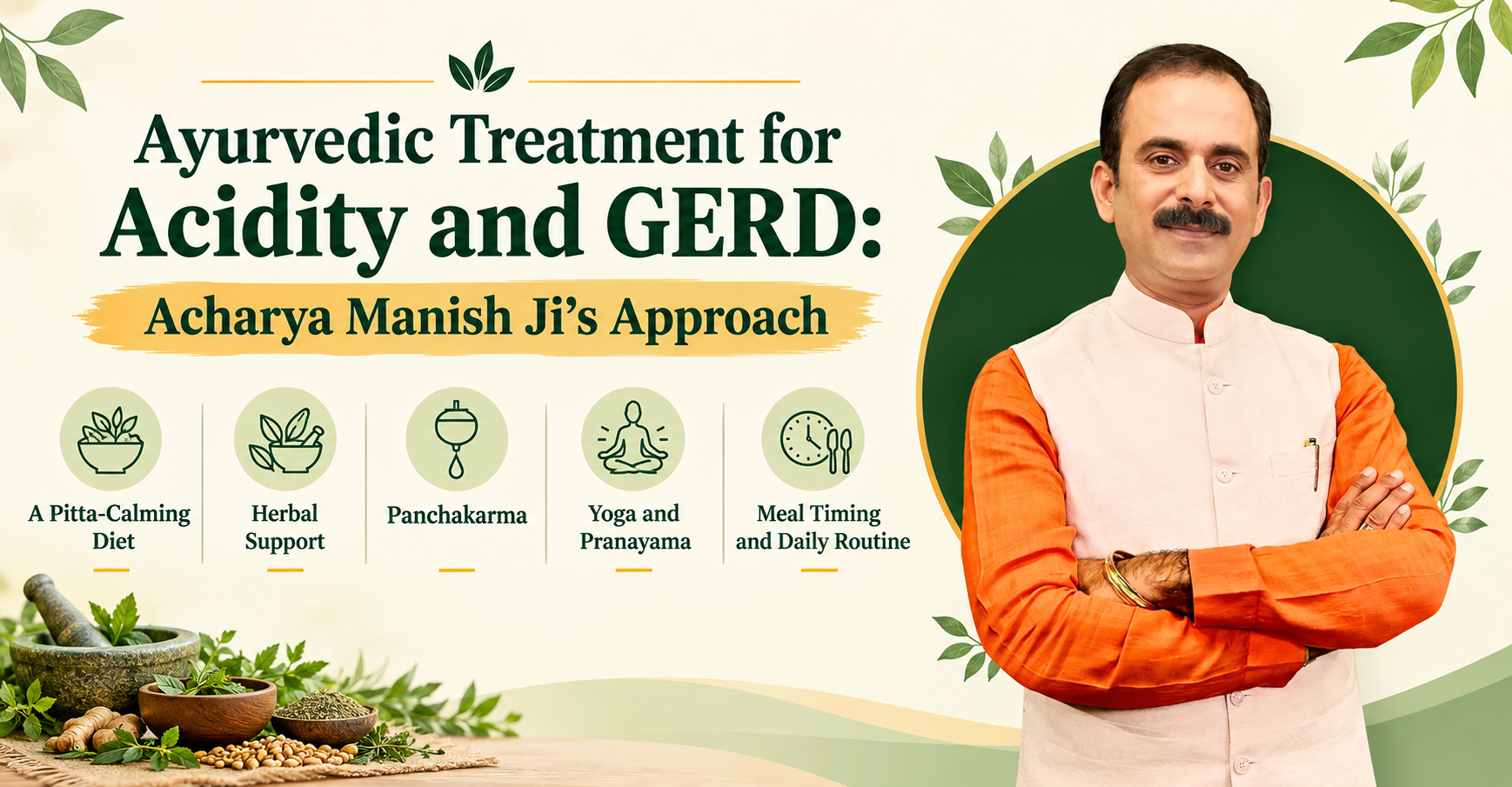
This approach goes beyond calming the burn. It aims to cool Pitta, strengthen Agni and fix the habits behind the problem.
-
A Pitta-Calming Diet
Cooked vegetables, moong dal, rice, buttermilk and coconut water are gentle on the stomach. Fennel (saunf) after meals helps settle digestion. On the other hand, spicy, oily and fermented food, citrus fruits, tea, coffee and fizzy drinks are best avoided. His pH-balanced diet also builds meals around seasonal fruits, fresh salads and simple home-cooked food.
-
Herbal Support
Some herbs are traditionally used to cool Pitta and protect the stomach lining. Amla soothes heat, while Mulethi (licorice) helps calm the stomach. Shatavari and Giloy also support Pitta balance. A doctor decides which herbs suit you and in what dose.
For a deeper imbalance, Ayurveda uses Virechana, a guided cleansing therapy that helps clear extra Pitta. A doctor decides if it suits you after a check-up.
-
Yoga and Pranayama
Stress often makes acidity worse. Sitting in Vajrasana for a few minutes after meals supports digestion. Meanwhile, Anulom Vilom and meditation help calm the mind.
-
Meal Timing and Daily Routine
When you eat matters as much as what you eat. An early dinner gives the stomach time to empty before sleep. So keep a gap of two to three hours before lying down, and skip late-night snacks.
Simple Daily Habits for Acidity and GERD
Small changes in your daily routine can help your stomach feel better. These habits are easy to follow and build up over time —
- Eat slowly and chew well: Digestion starts in the mouth. When you chew properly, your stomach works less and makes less acid.
- Keep portions moderate: A very full stomach pushes acid upward. Ayurveda suggests filling the stomach only halfway with food, a quarter with water and leaving the rest empty.
- Sip warm water through the day: Warm water supports Agni and keeps digestion smooth. On the other hand, cold drinks can slow it down.
- Practise Malasana daily: Acharya Manish Ji suggests this simple squatting pose for better digestion. Sit in a deep squat with your feet flat and your palms joined at the chest. It gently presses the abdomen and helps ease gas and heaviness.
- Take a short walk after meals: A gentle 10 minute walk helps food move along. However, avoid running or heavy exercise right after eating.
- Wear loose clothes: Tight belts and jeans press on the stomach. As a result, acid finds it easier to rise.
- Raise your head while sleeping: Lifting the head end of your bed by a few inches keeps acid down at night.
Together, these habits support the diet and therapies above, making relief easier to keep up.
Conclusion
Acidity is an occasional burn, while GERD is reflux that keeps coming back. The difference lies in how often it happens, how long it lasts and how it affects your nights. Ayurveda sees both as Amlapitta and focuses on cooling Pitta and strengthening digestion. Knowing acidity vs GERD help you choose the right care at the right time.
Take the first step toward lasting digestive relief with Acharya Manish Ji‘s expert team. Book an online video consultation from our official website to get guidance from holistic experts or contact us today.

FAQs
Q1. What is the main difference between acidity and GERD?
Ans. Acidity is an occasional burning that settles in for a few hours. GERD is reflux that comes back twice a week or more and often gets worse at night.
Q2. Can acid reflux turn into GERD?
Ans. Yes. If acid reflux keeps happening for weeks, it can irritate the food pipe and develop into GERD.
Q3. Which foods help calm acidity naturally?
Ans. Cooked vegetables, moong dal, rice, buttermilk and coconut water are gentle on the stomach. Chewing a little fennel (saunf) after meals also helps digestion.
Q4. How does Ayurveda help with GERD?
Ans. Ayurveda works to cool Pitta and strengthen digestive fire. It does this through diet, herbs like Amla and Mulethi, yoga and better meal timing.
Q5. How does Acharya Manish Ji approach acidity and GERD?
Ans. Acharya Manish Ji focuses on the root cause which is weak digestion and daily habits. His approach combines a Pitta-calming diet, herbal support, Panchakarma and a simple daily routine.