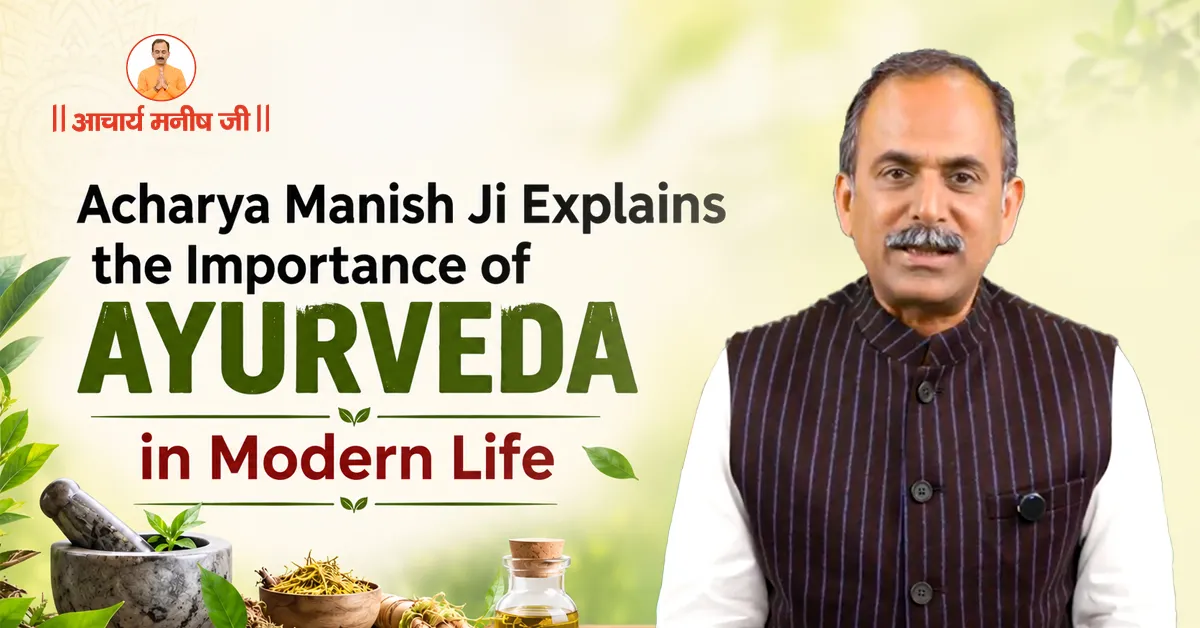

Modern life moves fast and daily health habits often get left behind. Late meals, long screen hours and poor sleep slowly strain the body. Ayurveda offers a simple answer: care for the body every day, before problems grow. Acharya Manish Ji explains this view in clear, practical terms.
The need is real in India. According to WHO estimates, non-communicable diseases cause about 63% of all deaths in the country. Many of these are linked to food, routine, and stress.
This blog introduces Acharya Manish Ji and explains why Ayurveda matters today. It then covers his views on food, prevention, and daily rhythm.
Who Is Acharya Manish Ji?
Acharya Manish Ji is an Ayurveda guru known for his focus on natural healing. His own story shaped this focus. At 16, he fell ill with repeated fevers, coughs and colds. He stayed unwell for about two years, even after seeing several doctors.
A summer with his uncle, an Ayurvedic practitioner, changed this. After a few months of Ayurvedic care, he began to recover. As a result he went on to study Ayurveda and classical texts such as the Charak Samhita.
Today, many people see him as a healing expert who treats Ayurveda as a way of living, not only as treatment. He believes the body can heal itself when its balance returns. His story also shapes his message: lasting health comes from understanding the body, not only from quick relief. Next, we look at why this system suits today’s life.
Why Ayurveda Still Matters in Modern Life
Modern routines challenge the body in many ways. Meals are skipped or eaten late, and packaged food often replaces home cooking. Screens cut into sleep, and stress rarely stops. As a result, digestion, energy, and mood often suffer together.
What Is Ayurveda?
Ayurveda is India’s traditional system of health. It sees a person as body, mind, and digestion working together. Its ideas rest on two basics: the three doshas and Agni.
The Three Doshas
Ayurveda describes three energies in the body:
- Vata: movement, breathing and nerve signals.
- Pitta: heat, digestion and sharp thinking.
- Kapha: structure, strength and moisture.
Each person has a different mix, called Prakriti. So what suits one person may not suit another.
Agni: The Digestive Fire
Ayurveda calls digestion Agni, and it sits at the base of health.
- Strong Agni: The body uses food well.
- Weak Agni: Ama, a sticky waste, can build up.
Late meals, heavy food, and stress can all weaken Agni.
Why This Suits Today’s Life
This is why Ayurveda fits today’s life. Modern habits like a sedentary lifestyle, poor sleep, and unhealthy eating habits strain exactly the things it studies: digestion, sleep, and calm. Ayurveda works best as preventive care and supportive care. Next, we look at how Acharya Manish Ji explains its importance.
Acharya Manish Ji’s Ideology: Why Ayurveda Matters
At the heart of Acharya Manish Ji’s message is a simple idea: health is built every day mostly through what we eat and how we live. He explains the importance of Ayurveda through a few clear beliefs. Each one applies directly to modern life.
Food Is Medicine
Acharya Manish Ji describes food as medicine. In Ayurveda, every meal either supports the body or burdens it. So he asks people to choose with care what goes on the plate.
He suggests fresh, light, home-cooked meals with fruits and raw vegetables. He also advises limiting salty, fried and packaged foods. Light food is easier to digest, which Ayurveda links to stronger digestion. For example, fruit, dal with vegetables, and a simple dinner make a good day. Ayurveda also asks people to eat on time, with the main meal at midday. In this view, care begins in the kitchen.
Prevention Comes First
‘Swasthasya Swasthya Rakshanam’, which means protecting the health of the healthy. Acharya Manish Ji shares this view. He asks people to act before a disease grows, not after.
The body gives early signals, such as poor sleep, low energy, or weak digestion. So he asks people to treat these as messages. According to him, Panchakarma should be done at least once a year for preventive care and better digestion. It is a set of five cleansing therapies: Vamana, Virechana, Basti, Nasya, and Raktamokshana.
Treating the Root Cause
Ayurveda looks at why a problem appears, not only at the problem itself. Poor sleep, irregular meals, and constant stress often sit behind everyday complaints. So he looks at habits first. Fixing these gives the body a better chance to recover.
A Steady Daily Rhythm
Ayurveda values rhythm over effort. Waking, eating and sleeping at steady times keep the body calm. He recommends a fixed sleep time, daily movement, and some quiet time each day. A short walk after meals, away from screens, can also help. Yoga, pranayama and meditation fit in here too.
Living Close to Nature
Another idea is to turn to natural care first. Ayurveda traditionally uses herbs such as Ashwagandha, Giloy and Triphala for strength and digestion. However, herbs suit people differently. So take them only under a qualified doctor’s guidance, especially if you use regular medicines. He sees herbs as one part of care, not a replacement for food and routine.
These beliefs connect. Food builds the body, prevention protects it and rhythm keeps it steady. Next, we look at the part of his guidance that calms the mind.
Want to bring food-first care into your daily routine?
Yoga and Mind Balance: Acharya Manish Ji as a Yoga Expert
Ayurveda treats the mind and body as one. So he places yoga, pranayama, and meditation at the centre of daily life. As a yoga expert, he encourages even a short daily practice. Gentle yoga asanas improve movement, and slow breathing calms the mind. Meditation adds a few quiet minutes to a busy day. These practices need little space or time.
Daily Yoga for Heart Health
Research supports this habit. A 2016 meta-analysis in the European Journal of Preventive Cardiology combined 32 randomised trials. Compared with no exercise, yoga lowered systolic blood pressure by 5.21 mmHg and LDL cholesterol by 12.14 mg/dL. It also raised HDL cholesterol by 3.20 mg/dL. The trials were small. But it shows how yoga supports health.
Start Small and Stay Regular
Ten minutes a day is a good start. Pranayama, such as five minutes of slow, deep breathing after waking, is easy to add. Beginners should learn poses from a trained teacher. Also, people with health conditions should check with their doctor first.
Over time, a steady practice matters more than a long one. His message to people, beyond practice, is about responsibility.
Acharya Manish Ji’s Message: Take Charge of Your Health
Acharya Manish Ji shares his message through public talks and online sessions. As a motivational speaker, he often asks people to take ownership of their daily habits. His point is simple. Health does not begin in a clinic. It begins at the dining table, in the bedroom, and in the daily routine.
He also asks people to listen to their bodies early. Mild tiredness, poor sleep or a weak appetite can be early signals. In addition, he encourages patience. Habits change slowly, and results come with steady effort. So he suggests small steps such as eating on time, sleeping on time, and walking daily. Over time, these steps add up, and small wins build the confidence to keep going.
This message suits modern life well. Most people cannot change everything at once. However, almost anyone can change one habit this week.
Ready to start with one healthy habit?
Conclusion
Modern life makes daily care easy to forget. Acharya Manish Ji reminds people that food is medicine and that daily rhythm shapes health over time. So Ayurveda, followed steadily, supports natural wellness in today’s world. Small habits followed consistently are where this begins.
Bring Ayurveda into your everyday life with guidance from Acharya Manish Ji and his team. Tell them about your routine and health goals, and get simple steps that fit your lifestyle.
FAQs
1. Who is Acharya Manish Ji?
Acharya Manish Ji is an Ayurveda guru who promote natural healing. He explains Ayurveda as a way of living, where food is medicine and prevention comes first.
2. Why is Ayurveda important in modern life?
Ayurveda focuses on daily habits such as food, sleep and stress. These habits shape health, so steady care helps prevent problems.
3. What does Acharya Manish Ji mean by food is medicine?
It means every meal either supports the body or burdens it. He suggests fresh, light, home-cooked food and less fried and packaged food.
4. Can Ayurveda be followed alongside modern medicine?
Yes. Ayurveda works as supportive care. Tell your doctor about any herbs or routines you follow.
5. How can I start an Ayurvedic routine?
Begin with one habit, such as a fixed sleep time or lighter meals. Then add movement and pranayama step by step.