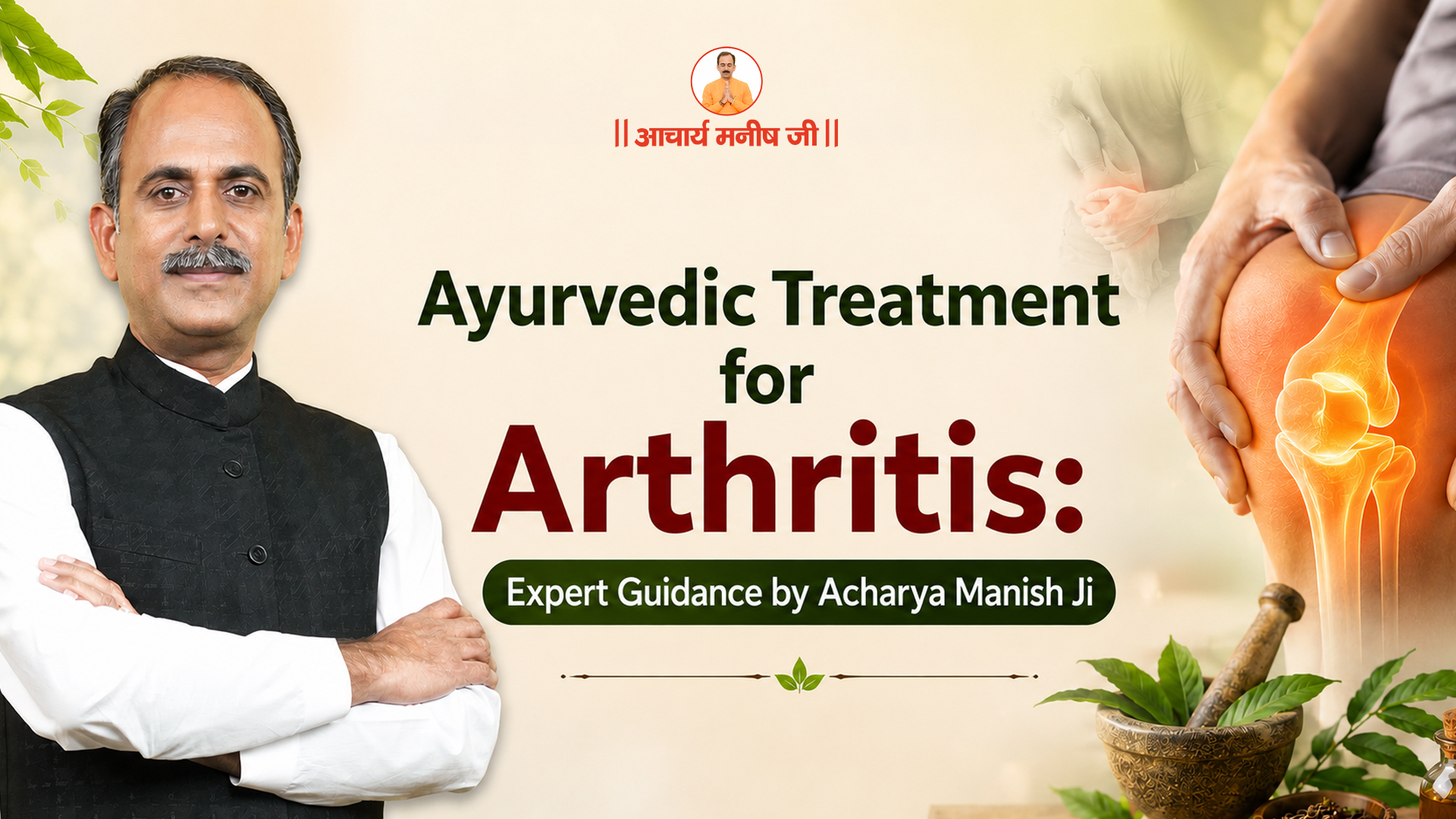

Knees that click on the stairs. Stiffness that won’t ease up in the morning. For a lot of people, this eventually leads to a doctor recommending knee replacement, and understandably, that’s a scary conversation to have.
Acharya Manish Ji has spoken often about why joint problems have become so common in recent decades, and what Ayurvedic treatment for arthritis can genuinely offer alongside whatever your doctor’s already advising. This blog walks through his perspective, the science behind it, and what actual therapy looks like.
What is Arthritis in Ayurveda? Understanding Sandhivata
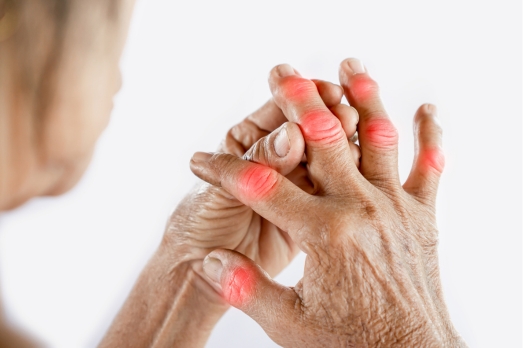
In Ayurveda, joint degeneration is called Sandhivata, tied to an aggravated Vata dosha, the energy governing movement in the body. When Vata builds up excessively in the joints, it dries out the synovial fluid that normally keeps cartilage lubricated and nourished, leading to the stiffness, dryness, and cracking sounds a lot of people notice as arthritis progresses.
This description actually lines up fairly closely with how modern medicine explains osteoarthritis, too: cartilage loss, reduced joint fluid, and inflammation.
Why Modern Lifestyle Habits Are Making Joints Worse: Acharya Manish Ji’s Take
Acharya Manish Ji points to something worth genuinely considering: how much our daily posture has changed. Sofas, car seats, office chairs, most of us now spend the entire day with our bodies locked at a 90-degree angle, something previous generations rarely did.
Squatting, sitting cross-legged, or sitting on the floor without support were once a natural part of daily movement, and interestingly, research does support that squatting strengthens the pelvic floor and improves ankle mobility, while easing strain on the lower back. Moving away from these natural postures, according to his observation, is part of why hip and knee joints are wearing out earlier than they used to.
Simple Daily Practices Acharya Manish Ji Recommends
A few habits he’s consistently suggested for supporting joint health:
- Practising Malasana (squatting posture) regularly, as part of a morning routine or during yoga
- Keeping body weight in check, since every extra kilo adds roughly four kilos of pressure on the knees
- Doing gentle daily movements that improve circulation around the knee joint, like ankle rotations and controlled knee bends
- Regular warm oil massage using sesame oil or herbal-infused ghee to help pacify Vata in the joints
Can Ayurveda Treat Arthritis? What the Therapies Actually Involve
This is a fair question, and honestly, the answer depends on how advanced the joint damage already is. Can Ayurveda treat arthritis in a way that eases pain, improves mobility, and slows further degeneration? For a lot of people, yes, particularly in earlier and moderate stages.
Whether it can fully replace a surgery your doctor has specifically recommended for advanced joint damage is a different, much more individual question, one that needs an honest conversation with both your orthopaedic doctor and an experienced Ayurvedic practitioner before deciding anything.
Ayurvedic Treatment for Arthritis at Jeena Sikho HiiMS
Preeti from Rohtak, Haryana, shares her inspiring Ayurvedic recovery journey: She struggled for years with swelling, joint pain, and severe weakness, relying on 15 daily allopathic pills that caused vomiting and fatigue. After starting Ayurveda and Nephropathy therapies, she experienced complete relief in just 7 days and regained strength and mobility.
A proper Ayurvedic treatment for Arthritis usually goes beyond home remedies, and this is where Panchakarma therapies come in. At Jeena Sikho HiiMS.
Arthritis Ka Ayurvedic Ilaj: Home Care Worth Trying
Alongside professional therapy, a few home practices are commonly suggested as part of arthritis ka Ayurvedic ilaj.
- Warm sesame oil infused with garlic and cloves, massaged onto the knees regularly, is a traditional remedy for easing stiffness.
- Contrast water therapy, alternating the feet between warm water (around 40-42°C) for a few minutes and cool water briefly, done consistently over a couple of weeks, is also commonly recommended to support circulation.
These are supportive practices, worth trying alongside medical guidance, not a substitute for a proper diagnosis if your pain is significant or progressing.
Should You Consider Ayurveda Before Surgery?
This is exactly the question a lot of people find themselves sitting with once “joint replacement” comes up in a conversation with their doctor. And it’s a fair question to ask, because Ayurveda has genuinely helped many people manage joint degeneration well enough to delay or even avoid that step, particularly when the condition is caught and addressed early, before the damage becomes too advanced.
The Panchakarma therapies mentioned above, Janu Basti especially, work directly to restore what Vata imbalance has dried out: the joint’s natural lubrication and nourishment. Combined with the daily practices Acharya Manish Ji recommends, squatting, weight management, warm oil massage, consistent circulation exercises, the body genuinely gets a real chance to heal and rebuild strength in the joint tissue, rather than just masking pain with medication until surgery becomes the only option left. A lot of people who’ve gone through this route describe real improvement in mobility and reduced stiffness within just a few sessions.
If you’re facing this decision, it’s worth giving your body that chance first. Have the conversation with your Ayurvedic doctor, understand your specific joint’s condition, and give a proper Ayurvedic treatment for arthritis a genuine try before committing to something as significant as surgery.

Conclusion
Ayurvedic treatment for arthritis offers a genuinely thoughtful, root-cause approach to joint health, rooted in daily posture, circulation, and Vata balance, all areas modern lifestyle habits have quietly neglected.
Whether it fits alongside your specific situation depends on your joint’s condition and your doctor’s guidance. If you’d like to understand what a personalised assessment could look like for you, feel free to contact us directly with our team.
FAQs
Q1. Is Janu Basti painful?
Ans. No, it’s a gentle, warm oil therapy generally described as soothing rather than uncomfortable.
Q2. How many sessions of Janu Basti are usually needed?
Ans. This varies by individual, and a proper assessment by an Ayurvedic doctor determines the right course for your specific condition.
Q3. Can squatting really help prevent joint problems?
Ans. Research does support that squatting improves pelvic floor strength and ankle mobility, though it’s one part of a broader lifestyle picture.
Q4. Should I stop planning for surgery if I try Ayurveda?
Ans.No, that decision should always be made with your orthopaedic doctor based on your joint’s actual condition, not on its own.
Q5. Are Basti therapies safe for everyone?
Ans. They’re generally gentle, but a proper consultation helps determine if it’s the right fit for your specific joint condition and overall health.