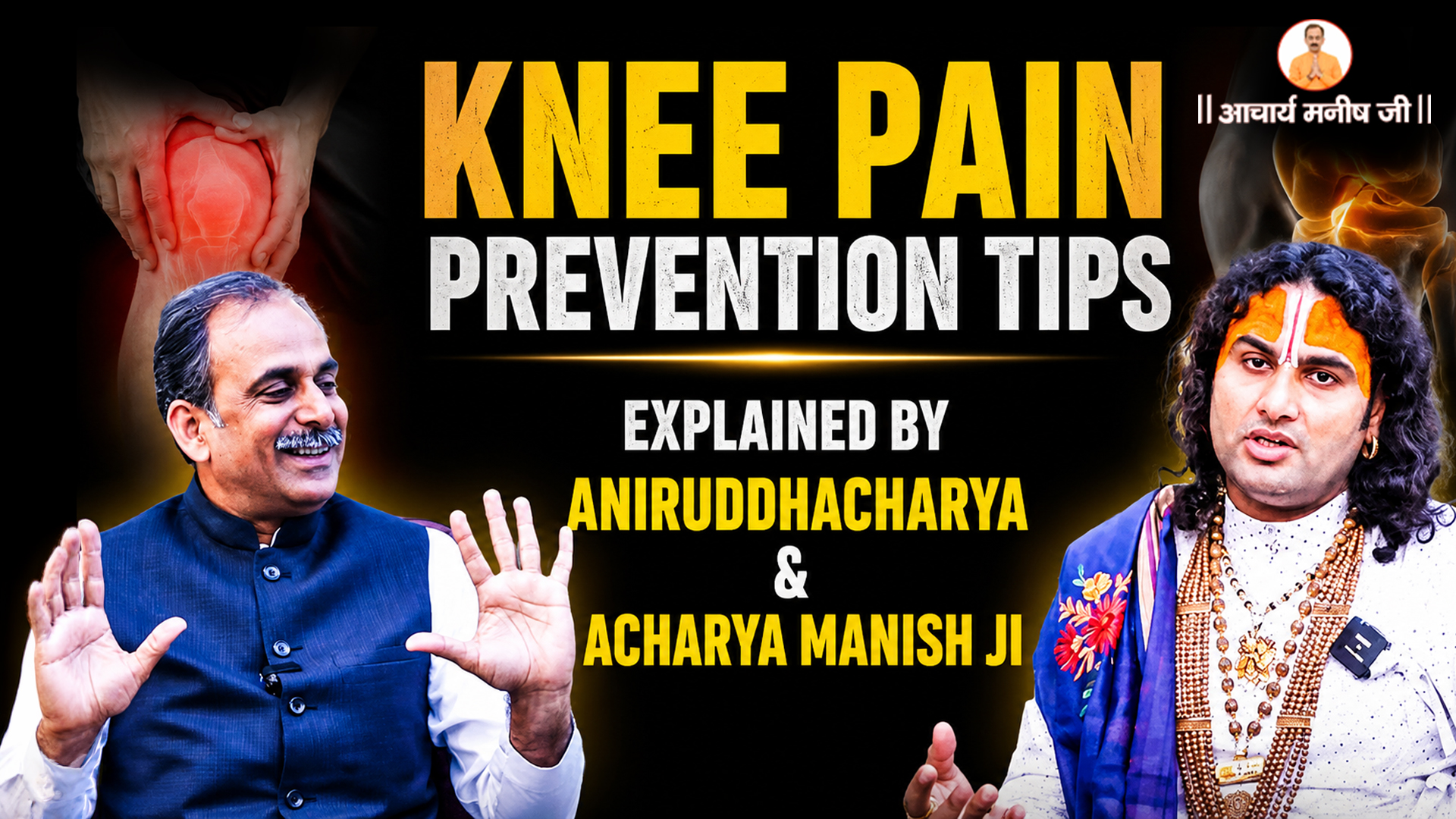
Do you remember the days when our grandparents used to sit on the floor comfortably, play with us for hours and walk long distances without complaining even once? Today, even our parents struggle to climb a few stairs without holding the railing. Many of us believe that knee pain is a natural part of ageing, but that’s not entirely true.
Well-known spiritual guide Aniruddhacharya Ji and wellness expert Acharya Manish Ji say that the actual cause behind it is our present lifestyle. This pain is caused not only by age but also by poor posture, weak joints and everyday habits. They show us a more natural, gentler way to heal than rushing into painful and expensive knee replacement surgeries. Let us look at their simple advice to prevent joint pain and also explore Ayurvedic treatment for knee pain.
Daily Routine and Posture Shifts
The path to healthy knees starts with the little things we do from morning to night. Our body has its own natural rhythm, and when we disrupt it, our joints suffer.
-
The Bathroom Habit: Indian Vs Western Toilet
One of the biggest changes in modern homes is how we use the bathroom. Aniruddhacharya Ji and Acharya Manish Ji strongly suggest switching back to traditional habits by choosing an Indian toilet. Using Western-style toilets, or even standing while urinating, puts a lot of unnatural pressure on our pelvic floor and knee joints. Squatting naturally strengthens the legs and keeps the joints flexible.
-
The Power of Vajrasana After Meals
Practice sitting in the Vajrasana pose while eating or right after your meals. This simple posture dramatically improves your digestion and ensures a healthy flow of blood down to your lower limbs.
-
Timing Your Dinner Correctly
Try to avoid heavy meals after sunset as much as possible. The body has natural digestion and nighttime cleaning processes. When you give your stomach a break in the dark hours, it can focus on those processes. When your digestion works properly, it stops harmful toxins from building up and damaging your knees.
Dietary & Lifestyle Additions
Taking care of your knees is also about the right daily additions to support your body as a whole. Pain can be greatly reduced by small changes in diet and activity.
-
A Well-Balanced Diet
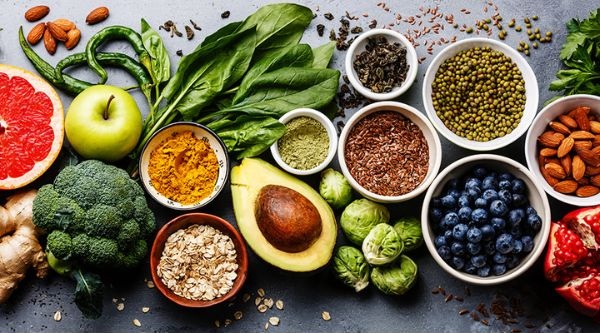
Nourish your joints by eating a healthy and balanced diet. Fill your plate with simple, home-cooked meals and fresh fruits and vegetables. They provide you with the essential vitamins and minerals to make you feel light and healthy.
-
Maintain a Healthy Weight
Every 1 kg of extra body weight puts about 4 kg of extra pressure on your knees. Excess weight causes your joints to work much harder than they should. Keeping a healthy weight will significantly reduce the mechanical stress on your joints every day and ease the pressure on your knees from constant strain.
-
Gentle Joint Movements
Stiffness is a major enemy of your joints. Try not to sit in one fixed position at your desk or on your sofa for hours. Instead, incorporate gentle movements and stretches into your day that will keep your joints healthy and your legs moving freely.
Home Remedies for Daily Comfort
-
Knee Soothing Massage
Gentle massage of the knees is highly recommended. Take some sesame, mustard or castor oil, heat it and massage it on your knees. Or you can add crushed garlic or cloves to the oil to get better results. This simple gesture helps circulation and relieves stiffness, making the walk feel much lighter.
-
A Bedtime Drink
Have a warm, soothing glass of cow’s milk before you go to sleep. Add a piece of cinnamon, two green cardamoms, a portion of fennel seeds and two pinches of turmeric to the milk and let it soak in.
You can add a little jaggery to sweeten this comforting drink, but make sure to avoid it if you are looking for an Ayurvedic diabetes treatment or managing blood sugar levels. This warm milk will relax your mind, reduce body aches, and make sure you wake up with less joint stiffness the next morning.
Traditional Ayurvedic Therapies for Knee Pain & Gut Detox
In Ayurvedic wellness centres, our experts perform Ayurvedic therapies for joint pain to provide natural relief to the joints.
-
Janu Basti
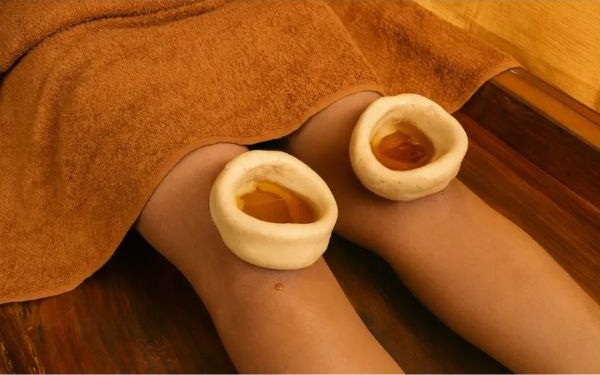
Traditional wellness centres have expert doctors who use therapies like Janu Basti for joint pain, in which a small ring of dough is placed over the knee to hold the warm, medicated herbal oils in place. It deeply nourishes and lubricates the joint tissues from the outside.
-
Janu Lepam
Another gentle method is Janu Lepam, in which the herbal paste is applied directly to the knee. This pullout swells and eases intense inflammation.
-
Panchakarma
For a complete body reset, our experts use Panchakarma. This is a deep bodily detoxification therapy designed to calm the Vata dosha. In ancient wisdom, an unbalanced Vata (air element) is considered the primary root cause behind joint dryness and deterioration. Balancing this energy through Panchakarma is a complete Ayurvedic therapy for knee pain that restores your body’s natural strength.
Conclusion
Seeing our parents or grandparents live in constant pain can make us feel helpless, but nature has given us everything we need to heal. As Aniruddhacharya Ji and Acharya Manish Ji remind us, small, loving changes in our daily routines can save our joints from severe damage.
Choosing an Indian toilet, eating a healthy diet, and opting for a traditional Ayurvedic treatment for knee pain can make a huge difference in how you feel. If you need personalised guidance from home, you can contact us today.

FAQs
Q1. Is knee pain always related to old age?
Ans. Knee pain is often linked with lifestyle habits, poor posture, weak joints, excess weight, and lack of movement, not just ageing alone.
2. Why do Aniruddhacharya Ji and Acharya Manish Ji recommend Indian toilets?
Ans. They believe squatting helps keep the joints flexible and reduces unnatural pressure on the knees and pelvic area.
3. Can simple lifestyle changes help reduce knee pain?
Ans. Habits like eating balanced meals, maintaining a healthy weight, gentle movement, and avoiding long sitting hours can support joint health.
4. What are some Ayurvedic therapies used for joint pain?
Ans. Therapies like Janu Basti, Janu Lepam, and Panchakarma are commonly used in Ayurvedic care for supporting joint comfort and mobility.
5. Can I get guidance for knee pain from home?
Ans. Yes, through Jeena Sikho VOPD, people can connect with experts online for personalised guidance and support.