

Getting enough sleep is supposed to leave you feeling rested, yet that does not always happen. You may feel tired throughout the day, find it difficult to recall familiar things or notice tingling in your hands and feet. Sometimes, people put the blame on a stressful work schedule, irregular meals or aging without looking into what might be causing the problem.
Vitamin B12 is one nutrient worth understanding because it helps the body make red blood cells, maintain healthy nerves and produce DNA. When the body does not get this nutrient enough, the effects may show up in different ways, from unusual tiredness to changes in balance or memory. Of course, signs vary by person, and having one does not mean you have a deficiency.
In this blog, we will look at seven early vitamin B12 deficiency symptoms, look at why levels may fall, explain how testing works and discuss vegetarian food choices and an Ayurvedic approach to everyday wellness.
What Is Vitamin B12 and Why Does Your Body Need It?
Vitamin B12, also called cobalamin, is a water-soluble vitamin that the body needs in small amounts but cannot do without. It plays an important part in making red blood cells, maintaining the nervous system and producing DNA, the material that carries genetic instructions in our cells.
Red blood cells carry oxygen around the body. When B12 levels become too low, the body may struggle to make healthy blood cells, which can lead to a type of anaemia. At the same time, a deficiency can affect the nerves, causing sensations such as tingling or numbness.
7 Early Vitamin B12 Deficiency Symptoms You Shouldn’t Ignore
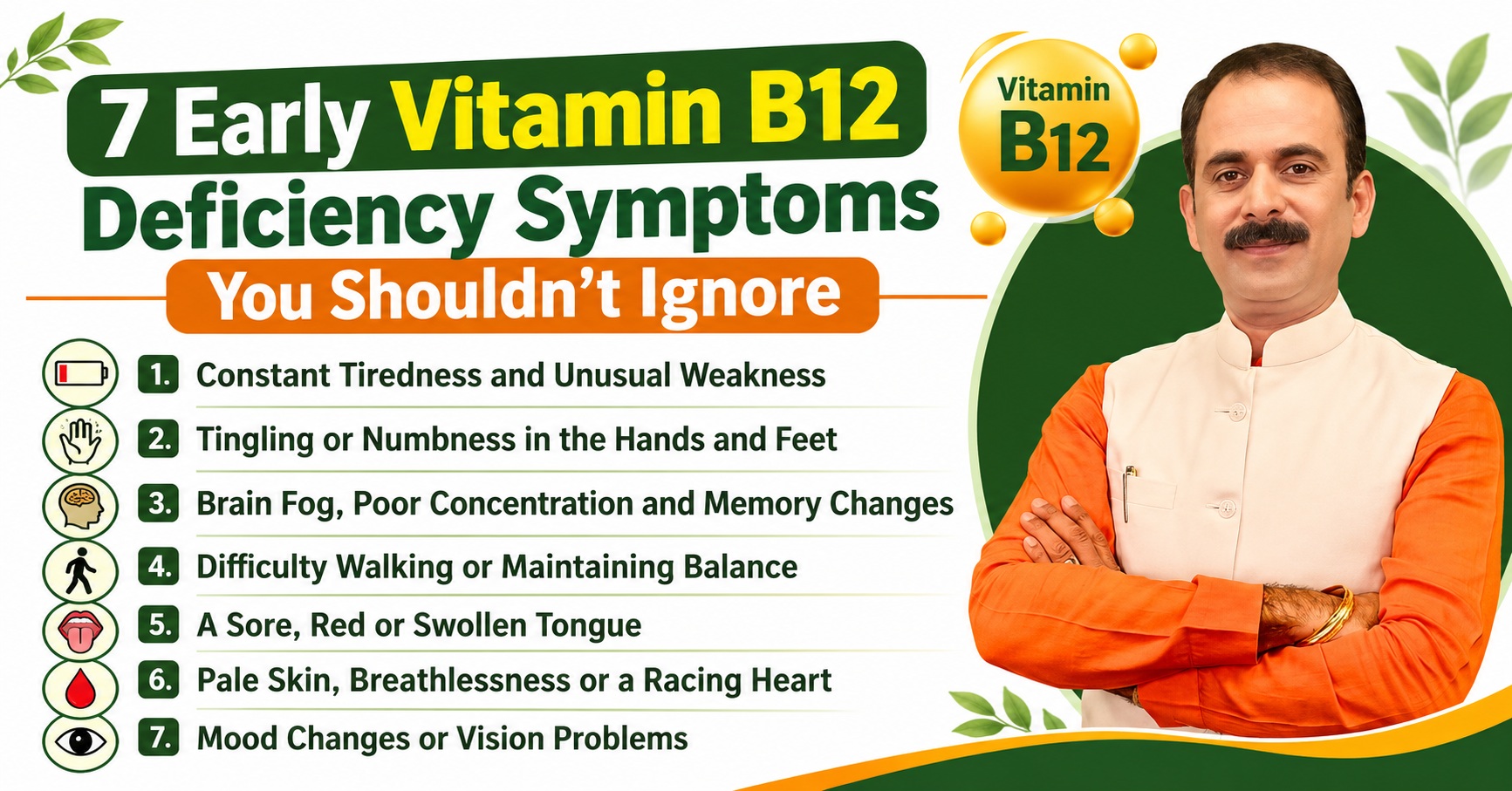
Not every symptom of tiredness or forgetfulness points to a vitamin deficiency. However, persistent changes deserve attention, particularly when several symptoms appear together or start to interfere with daily activities.
1. Constant Tiredness and Unusual Weakness
A long day at work leaves anyone worn out, and that is perfectly normal. The actual concern starts when you still feel heavy after a full night’s sleep. Maybe you take longer to get ready in the morning or sit down more often than you used to.
Low vitamin B12 can cause this kind of tiredness. Your body uses B12 to build healthy red blood cells, and those cells carry oxygen to every part of you. When B12 is too low and anaemia takes place, your muscles get less oxygen, so you feel weak and low on energy.
2. Tingling or Numbness in the Hands and Feet
A hand or foot may feel temporarily numb after you sit or sleep in an awkward position. That feeling usually improves when you change position. But repeated tingling, burning or numbness without an obvious reason deserves closer attention.
Vitamin B12 helps maintain healthy nerves. When the body lacks enough of it, nerve function may suffer, leading to pins-and-needles sensations or changes in feeling, particularly in the hands and feet.
3. Brain Fog, Poor Concentration and Memory Changes
Have you found yourself losing track of a conversation, forgetting why you entered a room or struggling to concentrate on a familiar task? Occasional forgetfulness happens to everyone, particularly during stressful or tiring periods. Frequent changes that affect everyday life, however, deserve attention.
B12 deficiency can affect the nervous system and may be associated with difficulty concentrating, short-term memory problems and confusion. Still, similar changes can occur with poor sleep, stress, certain medicines and several other health conditions.
Pay attention to how often the problem occurs and whether it is getting worse. If memory or concentration changes continue, a healthcare professional can review your symptoms and decide whether a vitamin B12 deficiency test or other investigations would be useful.
4. Difficulty Walking or Maintaining Balance
Feeling unsteady while walking, stumbling more often or finding it harder to coordinate your movements should not be ignored as simple tiredness. These changes may have several causes, but they can sometimes occur when a B12 deficiency affects the nervous system.
Vitamin B12 is essential for the normal functioning of nerves involved in sensation and movement. If those nerves become affected, a person may have trouble sensing where their feet are or maintaining a steady walking pattern.
5. A Sore, Red or Swollen Tongue
Changes inside the mouth can provide another reason to look for advice. Some people with B12 deficiency develop a tongue that looks red, feels sore or appears unusually smooth. Mouth ulcers or a burning sensation may also occur.
These symptoms are not exclusive to B12 deficiency. Other nutritional problems, irritation and oral conditions can cause similar discomfort. Still, if your tongue remains sore or the problem keeps returning, it is worth discussing it with a healthcare professional.
6. Pale Skin, Breathlessness or a Racing Heart
Have you started feeling breathless while walking at your usual pace or noticed your heart beating harder than normal during everyday tasks? If B12 deficiency causes anaemia, the body may struggle to carry oxygen efficiently, leading to weakness, paleness, breathlessness or a racing heartbeat.
These signs can also occur with other conditions, including iron deficiency and heart or lung problems. That is why it is important not to treat them as proof of low B12.
Severe breathlessness, chest pain, fainting or a racing heartbeat accompanied by significant weakness needs urgent medical attention. For symptoms that are milder but keep recurring, look for a proper assessment to identify the cause.
7. Mood Changes or Vision Problems
Vitamin B12 deficiency may also affect the nervous system in ways that are not immediately obvious. Some people experience changes in mood, low mood, anxiety, confusion or difficulty thinking clearly. In certain cases, problems with eyesight may also occur.
Of course, feeling low or anxious does not automatically mean your B12 level is low. Mood and vision changes can have many explanations, and each person needs an assessment based on their symptoms and medical history.
Do not ignore persistent changes simply because they are difficult to explain. Sudden loss of vision, severe confusion or other abrupt neurological changes require urgent medical attention.
The NHS guidance on vitamin B12 or folate deficiency anaemia describes symptoms that can include tiredness, mouth changes, numbness, memory problems and balance difficulties. It also explains that some symptoms can occur even without anaemia. If symptoms keep returning, consult our qualified healthcare professional for an assessment.

Why Is Vitamin B12 Deficiency a Concern in India?
Vitamin B12 is an important nutrient, but getting enough of it can be a challenge for people who follow a plant-based diet. In India, many families eat meals made around dal, roti, rice, and vegetables. These foods have an important place in everyday eating, but most ordinary foods do not naturally provide reliable amounts of vitamin B12.
A review of 14 studies involving apparently healthy adults and older adults in India found that low B12 levels were common among the groups studied. The researchers also noted differences in how the studies measured and defined a deficiency. So, the findings highlight a concern, but they should not be taken as an exact estimate for every person in India.
You can read the research paper, Status of Vitamin B12 among Healthy Adult and Elderly Population in India: A Review, on PubMed.
The important point is that following a plant-based diet does not automatically mean a person has a vitamin B12 deficiency. They may need fortified foods or a suitable B12 supplement, depending on their diet and individual needs.
It is also worth remembering that diet is not the only possible cause. Even people who eat foods containing B12 can develop a deficiency if their body has issues with absorbing it.
What Causes Vitamin B12 Deficiency?
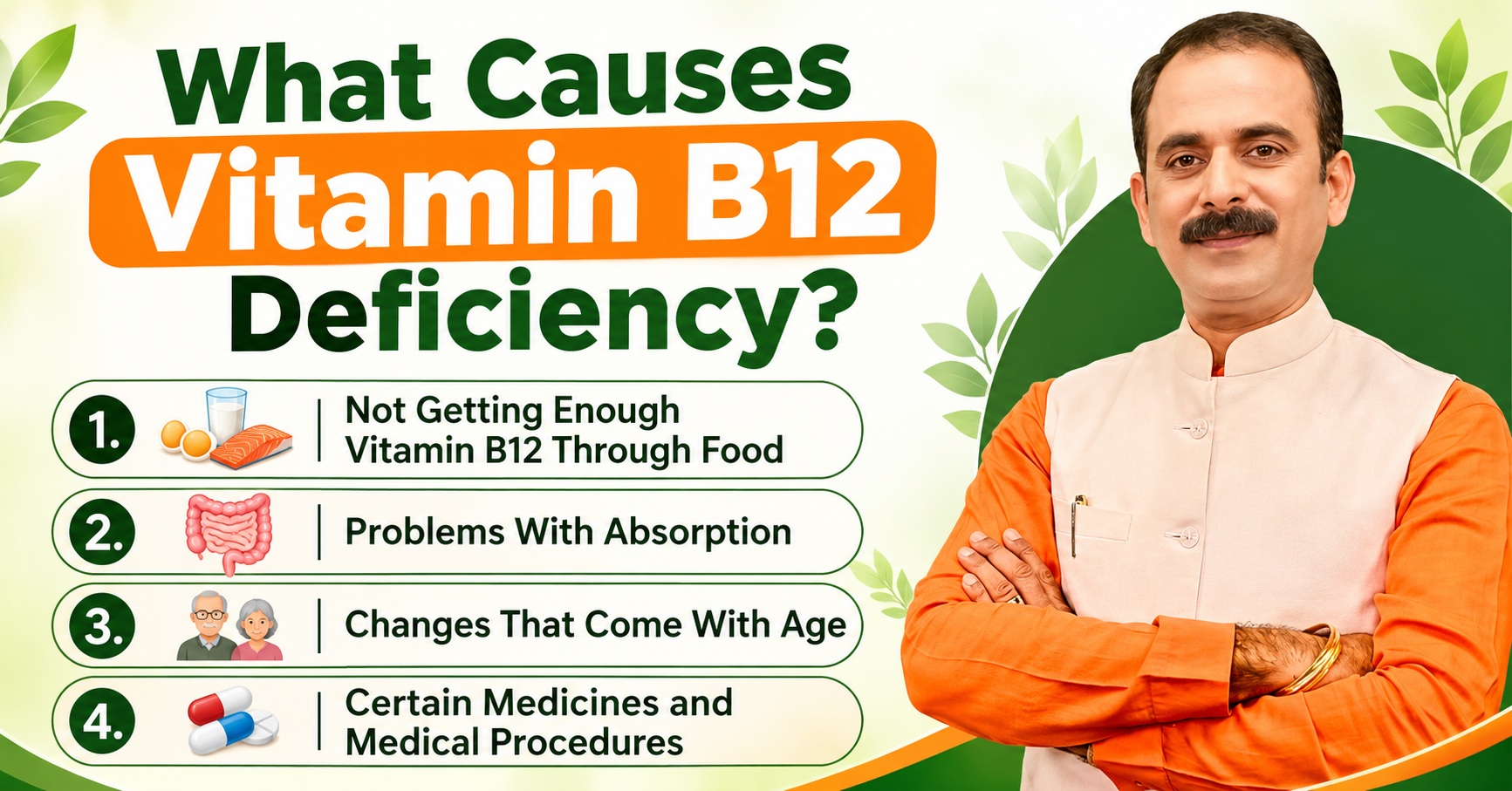
There is no single reason why a person’s B12 level may fall. Sometimes, the diet does not provide enough. In other cases, the body struggles to absorb the vitamin. Understanding the possible cause is important because the next steps may differ from person to person.
1. Not Getting Enough Vitamin B12 Through Food
If you eat vegetarian or vegan, B12 needs a little extra attention. Dairy helps, because milk, curd and similar foods do contain it. But the amount you take in rises or falls with your habits, meaning what you eat and how often.
Fruits, vegetables, pulses, grains, nuts, seeds and leafy greens all deserve a place in your meals. They keep your diet balanced and supply plenty of other nutrients.
Some packaged foods have the vitamin added during production. Certain cereals, nutritional yeast and plant-based drinks fall in this group.
2. Problems With Absorption
Eating foods that contain B12 does not always mean the body will absorb enough of it. The digestive system has to process the vitamin before the body can use it.
Some stomach and intestinal conditions can interfere with this process. Previous surgery involving parts of the stomach or intestine can also affect absorption. In such cases, simply changing the diet may not be enough to correct the deficiency.
If symptoms continue despite a varied diet, it is worth discussing them with a healthcare professional rather than assuming that the problem comes only from food choices.
3. Changes That Come With Age
The stomach changes with age. It often makes less acid, and that makes it harder to take B12 out of food. Not every older person develops deficiencies in B12, of course, but this is one reason to keep in mind when symptoms start showing up.
So when a parent or grandparent complains of constant tiredness, numb feet, a forgetful mind or shaky steps, don’t just say “it’s age.” Sometimes it is. But sometimes something treatable is hiding in front of it, and only a proper check will tell you which.
4. Certain Medicines and Medical Procedures
Some medicines, including metformin and certain acid-reducing medicines, may affect a person’s B12 status, particularly with long-term use. Operations involving the stomach or intestine can also interfere with absorption.
If you take these medicines regularly or have undergone digestive surgery, ask your healthcare professional whether checking your B12 level would be appropriate.
The NICE guidance on vitamin B12 deficiency explains the dietary, medical and medication-related factors that may be considered during an assessment.
Who Should Pay Particular Attention to Vitamin B12 Deficiency Symptoms?
Anyone can develop a vitamin B12 deficiency, but some people may need to pay closer attention to their intake or symptoms.
- People following a vegan diet: Since ordinary foods are not dependable sources of B12, fortified foods or suitable nutritional supplements may be needed.
- Older adults: Age-related changes can affect the absorption of B12 from food.
- People with digestive conditions: Some stomach and intestinal problems can interfere with nutrient absorption.
- People taking certain medicines: Long-term use of medicines such as metformin or some acid-reducing drugs may affect B12 levels.
- Pregnant and breastfeeding women following a vegan diet: Proper B12 intake is particularly important during this period. Their dietary needs should be discussed with a qualified healthcare professional.
These factors do not mean that a person definitely has a deficiency. They simply indicate when it may be worth discussing dietary intake, symptoms and testing with a healthcare professional.
How Is Vitamin B12 Deficiency Diagnosed?
Do you feel unusually tired most days, get tingling in your hands or feet again and again, forget things more than before, or lose your balance now and then? Consider visiting a doctor instead of waiting for these changes to settle on their own.
A test makes more sense when these problems come with certain background factors. These include a diet that gives you very little B12, a stomach or gut condition, or long-term use of some medicines.
The doctor will usually start by talking with you. Expect questions about what you eat, which medicines you take, how long the symptoms have lasted and what illnesses you have had. Your answers help the doctor decide whether a B12 test or any other check is worth doing.
What Does a Blood Test Measure?
A blood test can measure the amount of vitamin B12 in your blood. Depending on the result and your symptoms, the healthcare professional may also suggest other tests.
Sometimes, an additional test for a substance called methylmalonic acid (MMA) can help clarify an uncertain result. The need for further testing depends on the individual case.
What Is the Vitamin B12 Normal Range?
There is no single number that should be used to interpret every B12 test. Laboratories may use different testing methods and reference ranges, so the result should be read alongside the person’s symptoms and medical history.
For example, the NIH Office of Dietary Supplements reports that many laboratories consider levels below approximately 200–250 pg/mL to be low. However, this is not a universal cut-off for diagnosis.
Avoid interpreting your report on your own. A healthcare professional can explain what your result means and whether you need further tests or treatment.
Can B12 Deficiency Occur Without Anaemia?
Yes. A person can experience effects on the nervous system even without developing anaemia. This is one reason a normal blood count does not always rule out a B12 deficiency.
If symptoms remain, a healthcare professional may consider the B12 result alongside other findings.
How to Increase Vitamin B12 Naturally: Food and Daily Habits
If you want to understand how to increase vitamin B12 naturally, start by looking at the sources of B12 in your regular diet. Food choices are important, but the right plan depends on whether your levels are enough, how you eat and whether your body absorbs the vitamin properly.
Include Vegetarian Sources of Vitamin B12
Milk, yoghurt and other dairy foods contain vitamin B12 and may help people who include them in their diet meet their needs. The amount varies by food and serving size, so a varied diet is important.
For people who avoid dairy or follow a vegan diet, certain fortified foods can provide B12. These may include selected breakfast cereals and plant-based milks.
Plan Your Meals Carefully
Ayurveda places importance on Aahar, or food, as part of daily wellbeing. Eating regular meals with a variety of vegetables, pulses, grains, nuts and seeds can help build a balanced eating pattern. However, variety alone does not ensure that the body receives enough B12.
What Is the Ayurvedic Approach to Vitamin B12 Deficiency?
Ayurveda places importance on everyday food choices, digestion and daily routine. Concepts such as Aahar (food) and Vihar (lifestyle) encourage people to pay attention to what they eat, how they organise their meals and the habits they follow each day.
In a plant-based routine, this may mean eating a variety of vegetables, pulses, fruits, grains, nuts and seeds rather than depending on the same few foods every day. It may also mean paying attention to meal timings and choosing foods that suit one’s needs.
Understanding the Place of Food in Ayurveda
Food is an important part of everyday Ayurvedic practice – Dincharya. Rather than looking at one ingredient as the answer to every health concern, the focus can remain on the overall eating pattern and how it fits into a person’s daily life.
Acharya Manish Ji often shares food tips and recipes for vitamin B12 and other health concerns on his social media platforms. In this blog, we have brought together two of the recipes he has shared for readers who want to explore his approach to plant-based food.
Why Digestive Health Deserves Attention
Digestion is an important part of the wider conversation about nutrition. From an Ayurvedic perspective, food and digestion have a major place in daily wellbeing. Modern clinical care, meanwhile, can investigate specific reasons why the body may not absorb vitamin B12 properly.
Acharya Manish Ji’s Perspective on Plant-Based Food
Acharya Manish Ji discusses preparations using watermelon seeds and other plant-based ingredients. The recipes are given below to maintain that focus and describe the preparation methods as food ideas.
They are not presented as proven treatments for vitamin B12 deficiency. This distinction allows the article to reflect the reference’s plant-based approach without suggesting that the recipes can do something that has not been established.
Recipe 1: Watermelon Seed Drink With Turmeric, Ginger and Curry Leaves
Acharya Manish Ji shares a simple recipe made with watermelon seeds and everyday kitchen ingredients. The preparation starts the night before, so you can soak the seeds and use them the following morning.
Ingredients
- 25 grams of watermelon seeds
- A small piece of fresh turmeric
- A small piece of ginger
- 10–11 curry leaves
- 2–3 cardamom pods
- 1–2 cloves
- Water, as needed
- Honey (optional)
How to Prepare It
- Take 25 grams of watermelon seeds and soak them in water overnight.
- The next morning, drain the seeds and discard the soaking water.
- Add the soaked seeds to a mixer grinder.
- Add the turmeric, ginger, curry leaves, cardamom and cloves.
- Add a little fresh water and grind everything until you get a smooth mixture.
- Leave the mixture to rest for around three hours.
- Stir the mixture before serving with shuddh honey. (You can add store link here of Honey)
Watch Acharya Manish Ji Explain the Recipe
Recipe 2: Watermelon Seed Preparation With Cumin, Mint and Coriander
The second recipe also uses watermelon kernels, commonly known as magaj. Acharya Manish Ji explains how to soak and grind the kernels, cook the mixture and freeze it into small portions. The method below follows the preparation described in the video.
Ingredients
- 250 grams of watermelon kernels (magaj)
- Water, approximately four times the volume of the kernels
- A little sendha namak
- Cumin, to taste
- Fresh mint or coriander, to taste
How to Prepare It
- Take 250 grams of watermelon kernels and place them in a bowl.
- Add water, using approximately four times the volume of the kernels.
- Leave the kernels to soak overnight.
- The next morning, drain the kernels and put them in a mixer grinder.
- Add fresh water and grind the kernels until you get a smooth, milk-like mixture.
- Strain the mixture through a clean cloth to separate the liquid from the remaining solids.
- Pour the strained liquid into a pan and cook it over a low flame, stirring as needed.
- Add a little sendha namak, cumin and finely chopped mint or coriander.
- Let the mixture cool enough to handle, then pour it into a clean ice cube tray.
- Place the tray in the freezer and allow the mixture to freeze completely into small cubes.
- Once frozen, transfer the cubes to a clean, freezer-safe container and keep them frozen until needed.
- Consume this preparation twice a week. As mentioned in Acharya Manish Ji’s video, take one teaspoon of pure Chyawanprash and one teaspoon of pure honey alongside it. (you can also add product links for the honey and Chyawanprash)
Watch Acharya Manish Ji Explain the Recipe
A small note: Acharya Manish Ji describes this preparation as a source of nutrients. However, the recipe has not been established as a reliable source of vitamin B12 or as a way to correct B12 deficiency. If you have a confirmed deficiency, seek professional advice rather than relying on this preparation alone.
Conclusion
Recognising vitamin B12 deficiency symptoms can help you take long-term changes seriously rather than dismissing them as tiredness or the result of a busy routine. A plant-based diet can include many familiar foods, such as vegetables, pulses, fruits, seeds and herbs, but ordinary foods are not dependable sources of vitamin B12. That is why people are following a diet plan that carefully manages their B12 intake. The seed-based recipes discussed by Acharya Manish Ji can be presented as plant-based food ideas.
If you have ongoing tiredness, tingling, memory changes or problems with balance, speak with a healthcare professional about whether testing is appropriate. For guidance on your health concerns, you can also contact us with our expert doctor’s team of Acharya Manish Ji.

FAQs
Q1. What are the first signs of vitamin B12 deficiency?
Ans. Early signs may include unusual tiredness, tingling in the hands or feet, difficulty concentrating and a sore tongue. These symptoms can have other causes, so a proper assessment is important if they remain.
Q2. What is the normal range for vitamin B12?
Ans. The range depends on the laboratory and the test used. Many laboratories consider levels below approximately 200–250 pg/mL to be low, but a healthcare professional should interpret your result alongside your symptoms.
Q3. Can people following a vegan diet develop vitamin B12 deficiency?
Ans. Yes. Ordinary foods are not reliable sources of B12. People following a diet plan need a dependable source, such as suitable fortified foods or recipes by Acharya Manish Ji.
Q4. Can watermelon seeds and leafy greens provide enough vitamin B12?
Ans. Watermelon seeds and leafy greens can be part of a varied plant-based diet, but they are not dependable sources of vitamin B12. They should not be used in place of appropriate B12 intake or treatment.
Q5. Can vitamin B12 deficiency affect memory and balance?
Ans. Yes. Low B12 can affect the nervous system and may cause memory changes, tingling or difficulty maintaining balance. Persistent symptoms need professional assessment, even if a person has not developed anaemia.