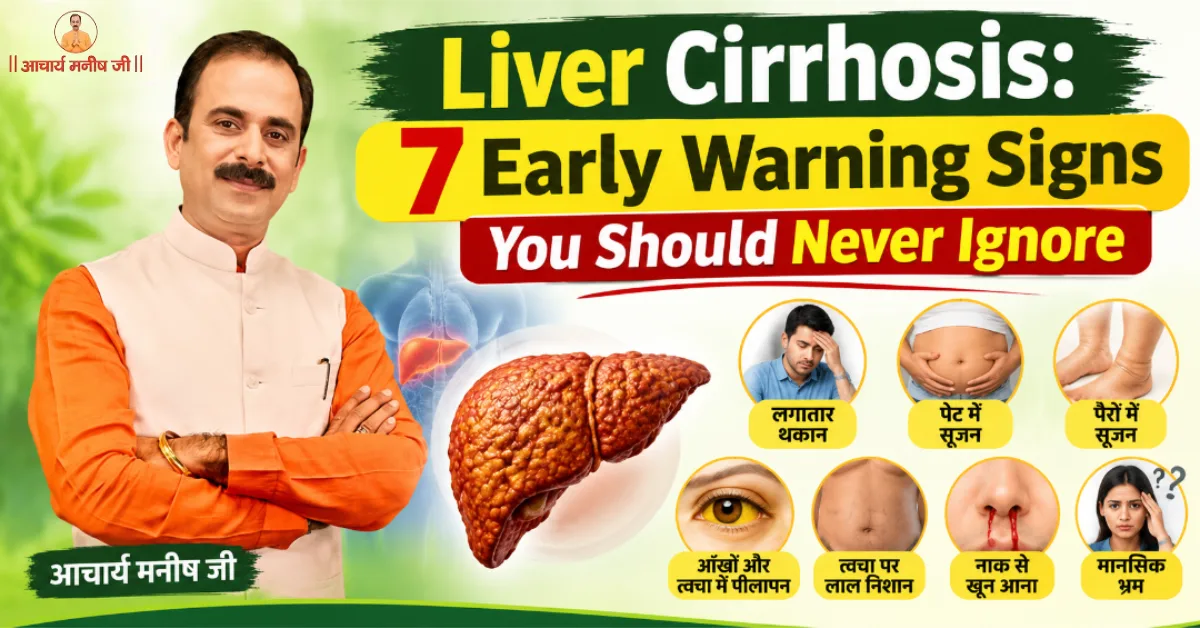

Liver cirrhosis is a serious disease. In it, scar tissue slowly replaces healthy liver tissue. It grows over many years and often shows no clear signs at first. Acharya Manish Ji teaches that the body gives early warnings before a disease settles in. So spotting these signs early is vital.
A 2020 study from Odisha reports that India has about 18.3% of all cirrhosis deaths in the world. Knowing the signs is therefore key. This guide gives clear facts about liver health, covers the causes, seven early warning signs, and the Ayurvedic view of the liver.
What Is Liver Cirrhosis? Understanding It Through Acharya Manish’s Lens
In cirrhosis, scar tissue slowly takes the place of healthy liver tissue. As a result, blood flows less freely through the liver. The liver then cannot do its work well. Its work includes clearing toxins, processing food, and making proteins that help blood to clot.
Ayurveda explains this through Agni, the digestive fire. He says most diseases begin with weak digestion, called Mandagni. Then a waste called Ama builds up, and Pitta dosha rises. Because this loads the liver, he sees cirrhosis as a slow process, not a sudden one.
So cirrhosis often goes unseen in its early stage. The liver keeps working even when part of it is damaged. Thus, small changes in strength, digestion, and skin need a closer look. Understand your liver health the Ayurvedic way with Acharya Manish Ji’s team.
Liver Cirrhosis Causes: How Daily Habits Slowly Scar the Liver
Several factors can lead to cirrhosis. For instance, doctors at AIIMS name alcohol, viral hepatitis, and fatty liver disease as the main causes in Indian studies. Genetic and autoimmune diseases and long-term contact with toxins can also add to the risk. Fatty liver that lasts for years can lead to cirrhosis as well.
Ayurveda looks at the daily habits behind these liver cirrhosis causes. First, heavy, oily, spicy and processed food weakens digestion. Late meals, poor sleep, and constant stress also build up Ama. Alcohol puts a direct load on liver cells, while sugary food adds to liver fat.
Many of these habits are common in daily life. They include skipped meals, late snacks, and fried food. Over the years, they put a steady load on the liver. So small daily choices matter.
Also, people with long-term alcohol use, fatty liver, hepatitis, diabetes, or obesity face a higher risk. So they need to watch for early signs with extra care.
Early Signs of Liver Cirrhosis: 7 Warning Signs You Should Not Ignore
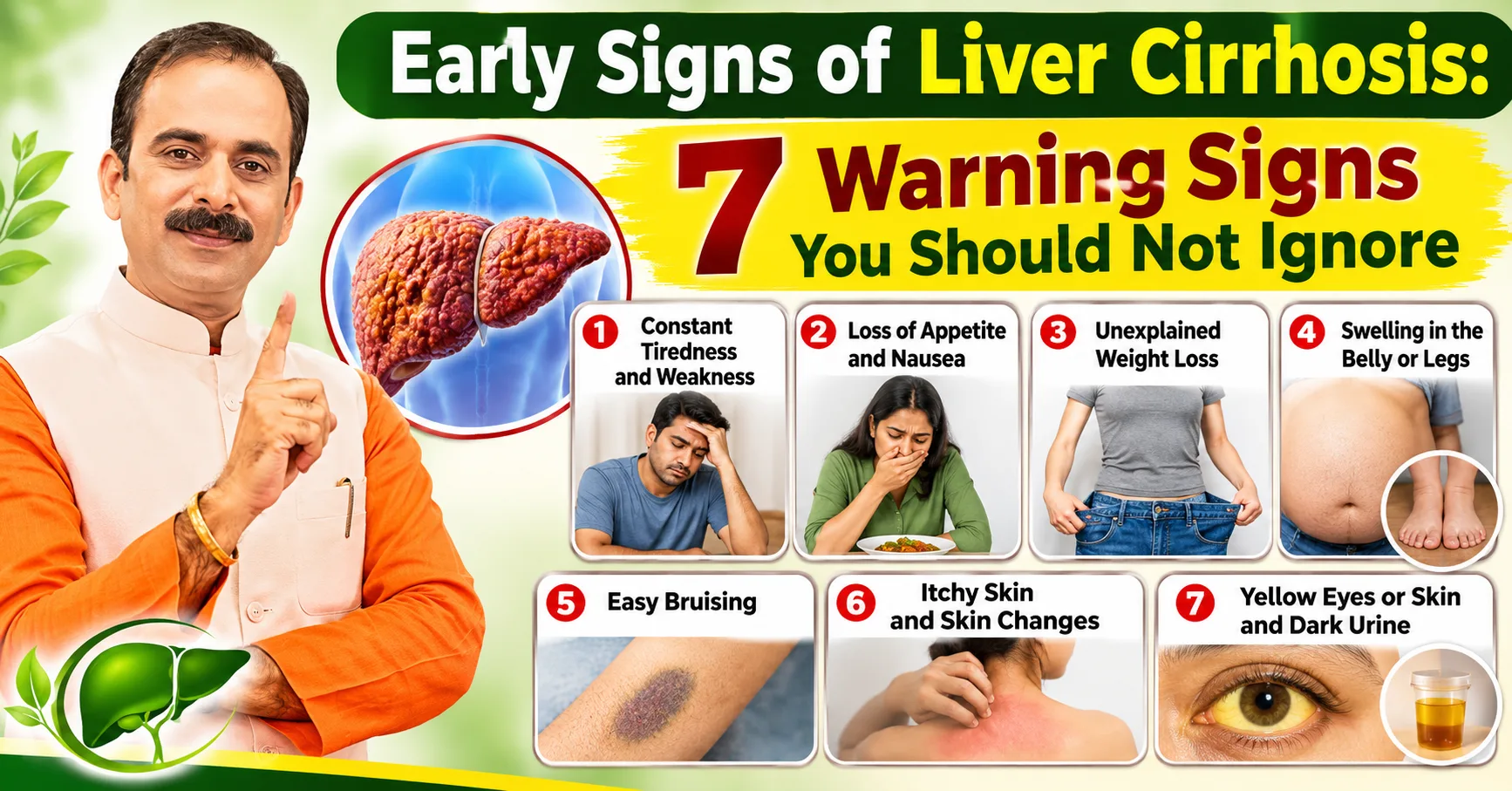
The early signs of liver cirrhosis are easy to miss. Many liver cirrhosis symptoms look like plain tiredness or an upset stomach. The liver rarely causes pain, so these small changes are often the only clue. Here are seven signs of liver damage that need notice.
1. Constant Tiredness and Weakness
Constant tiredness, even after enough rest, is often the first sign. The liver helps turn food into strength, so a strained liver leaves the body weak. In Ayurveda, weak digestion gives poor nourishment, and weakness follows. So tiredness that rest does not fix needs a closer look.
2. Loss of Appetite and Nausea
When the liver slows down, food may feel heavy, and hunger may fall. Nausea can also occur. For instance, a person may feel full after a few bites. Some people also feel sick after oily food. Acharya Manish Ji links this to Mandagni, or weak digestive fire.
3. Unexplained Weight Loss
Losing weight without trying is also a major sign. The body may take in fewer nutrients, so muscle can shrink too while the diet stays the same. Ayurveda explains this by weak digestion and poor nourishment of the body’s tissues.
4. Swelling in the Belly or Legs
A swollen belly or swollen ankles can point to fluid build-up. The swelling may feel tight and heavy. Thus, it is one of the signs that need quick notice.
5. Easy Bruising
The liver makes proteins that help blood to clot. So bruises may appear easily, and small cuts may bleed longer. Gums may bleed during brushing, or the nose may bleed without cause. Ayurveda links this to high Pitta, which affects the blood, or Rakta.
6. Itchy Skin and Skin Changes
Constant itching without a rash can occur when the liver is affected. It is often worse at night, so it can break sleep. Some people also get tiny spider-like veins or red palms. In Ayurveda, these skin changes point to extra Pitta and impure blood.
7. Yellow Eyes or Skin and Dark Urine
Yellow eyes or skin is called Kamala in Ayurveda. Urine may turn dark, and stools may look pale. These signs can appear as the damage grows, so they need quick notice. Pitta rules both digestion and blood, so a rise in it shows as colour changes.
One sign alone does not confirm cirrhosis, since many signs overlap with other problems. But a pattern of two or three signs needs notice. So it is wise to watch for such patterns early. Noting when a sign began and how long it lasts also helps.
Noticing any warning signs? Talk to Acharya Manish Ji’s Ayurvedic experts.
How Ayurveda Understands Liver Cirrhosis
Ayurveda sees the liver as a key seat of Pitta, closely tied to the blood. When Agni weakens, Ama builds up and blocks the body’s channels. As a result, the liver is under constant strain. Liver also guides how the body handles fat, bile, and blood. So when it weakens, digestion, skin, and strength all suffer.
The Ayurveda Classification of Disease places cirrhosis under Udara, a group of problems with belly swelling. Meanwhile, rising Pitta explains the heat, yellowing, and skin changes. Thus, Ayurveda looks past the liver and asks why digestion became weak.
This root-cause view shapes Acharya Manish Ji’s approach to liver care. It rests on four pillars: food, lifestyle, herbs, and therapies. Each one is explained below.
Acharya Manish’s Ayurvedic Approach to Liver Care
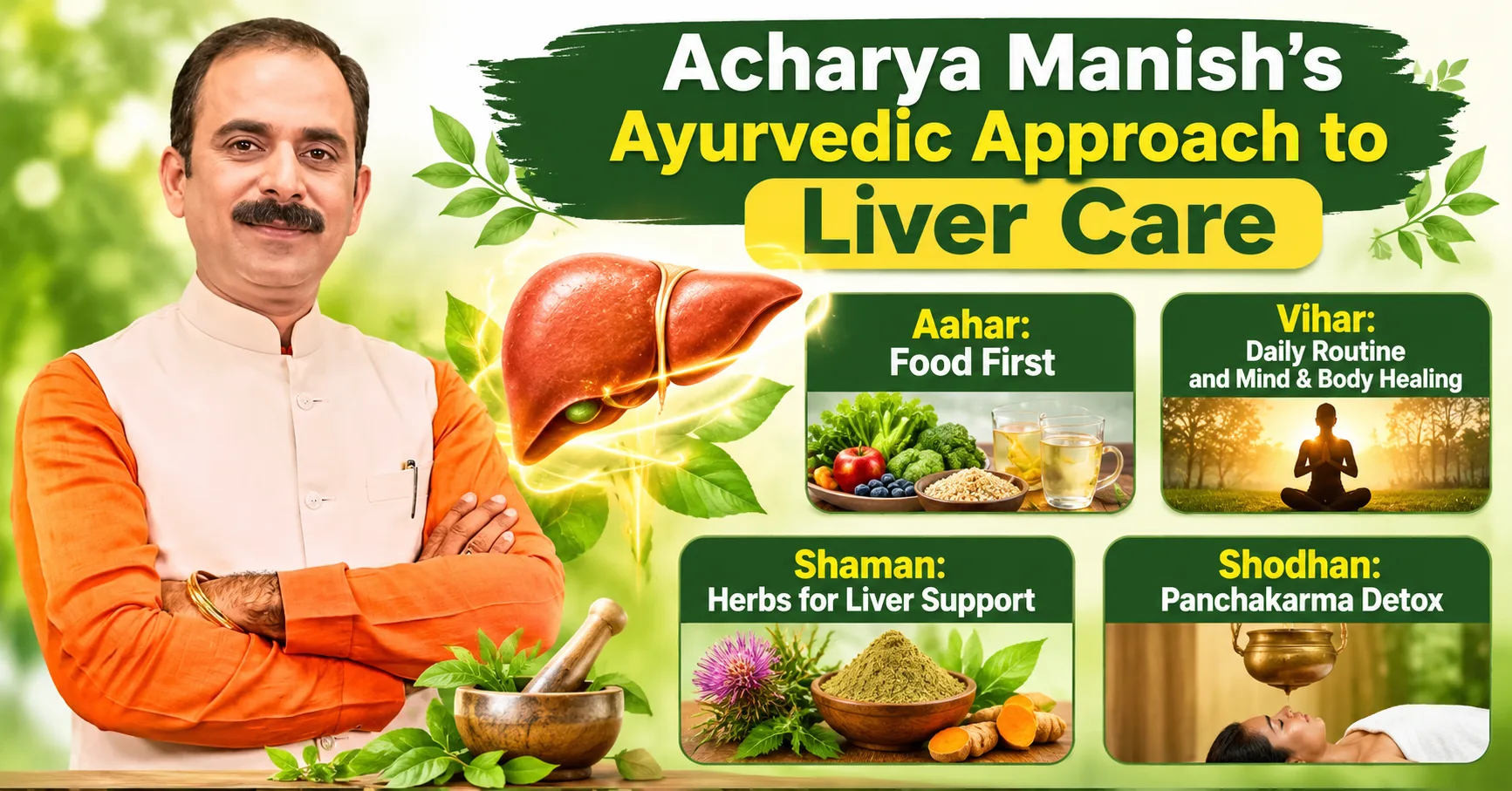
His approach to liver cirrhosis is gentle and focused on the cause. He aims to clear Ama, balance Pitta, and support the liver’s remaining strength. To do this, he works through four pillars: Aahar, Vihar, Shaman, and Shodhan.
Aahar: Food First
Food is the first pillar. He advises fresh fruits, vegetables, and millets in light, fresh meals. Oily, spicy, and processed foods raise Pitta, so he asks people to avoid them. Alcohol and caffeine are best left out too. Meals at fixed times, with an early dinner, also keep digestion steady. For instance, seasonal vegetables, millet roti, and moong dal fit this plan.
Vihar: Daily Routine and Mind & Body Healing
Next, a regular routine protects the liver. Ayurveda holds that Pitta is most active late at night, so early sleep lets the liver rest. He advises early sleep and early waking, no daytime sleep, and a gentle walk each day. Smoking and alcohol are avoided.
The mind matters just as much. Stress and poor sleep slow healing, so he adds yoga, pranayama, and meditation. Gentle movement also keeps digestion active without strain. As a result, the body stays calm, and digestion improves.
Shaman: Herbs for Liver Support
Ayurveda uses herbs such as Bhumi Amla, Kutki, Kalmegh, Punarnava, Guduchi, and Bhringraj to support the liver. They are valued for their cleansing and protective power. But a trained Ayurvedic doctor must choose them, since the right herb depends on the person’s body. Self-medication with strong herbs is unsafe. So herbs work best as part of a full routine.
Shodhan: Panchakarma Detox
Shodhan means deep cleansing, and Panchakarma is its main system. It has five therapies: Vamana, Virechana, Basti, Nasya, and Raktamokshana. He sees them as a way to clear deep toxins. Each plan is personal. Still, an Ayurvedic doctor decides which therapies suit the person, after a careful check.
Read more about: Fatty Liver Ke Lakshan Karan Aur Ilaj
Conclusion
Liver cirrhosis grows slowly, so its early signs are easy to miss. These signs matter because they point to the root problem: weak digestion and a build-up of Ama. Acharya Manish Ji’s approach works on this root through food, daily routine, herbs, and cleansing.
Get expert guidance on Ayurvedic liver care from Acharya Manish Ji’s team. Book your consultation today and connect with experts for personalised care. Get a personalised Ayurvedic routine for your liver from Acharya Manish Ji’s team.
FAQs
1. What are the early signs of liver cirrhosis?
Constant tiredness, loss of appetite, nausea, weight loss, swelling in the belly or legs, easy bruising, itching, and yellow eyes or dark urine.
2. What causes liver cirrhosis?
Long-term alcohol use, viral hepatitis and fatty liver disease are the main causes, along with autoimmune and genetic conditions.
3. How does Acharya Manish Ji view liver cirrhosis?
He links it to weak digestion (Mandagni), Ama build-up, and raised Pitta, and works through food, routine, herbs, and Panchakarma.
4. Can liver cirrhosis be reversed?
Existing scarring generally cannot be undone, but removing the cause and starting early care can slow its progress under a doctor’s guidance.
5. Which foods should be avoided in liver cirrhosis?
Alcohol, caffeine, and oily, spicy, or processed foods are best avoided, with light, fresh meals at fixed times and an early dinner.