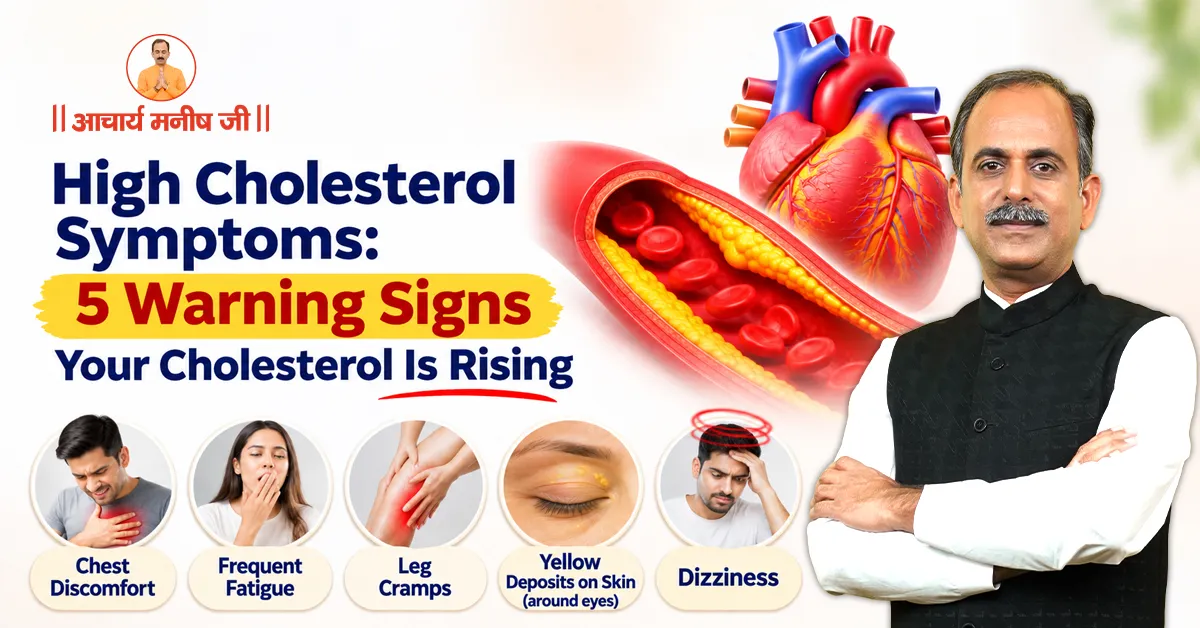

High cholesterol symptoms are often hidden, so many people learn about it only from a blood test. Even when signs appear, they usually show up late. Acharya Manish ji often explains that the body gives early signals before a disease grows. So knowing the early signs of high cholesterol gives you time to act early.
The ICMR-INDIAB study tested 23,665 Indian adults. It found that 87.3% had at least one unhealthy lipid level. Also, 49.4% had raised LDL, the “bad” cholesterol.
This blog explains what cholesterol is, what makes it rise, and five warning signs. It also explains the Ayurvedic view and Acharya Manish ji’s approach.
What Is Cholesterol and Why Does It Rise?
Cholesterol is a waxy, fat-like substance in the blood. The body needs it to build cells and make hormones. The liver makes most of it, and the rest comes from food.
Doctors talk about three main types. LDL is the “bad” cholesterol because it can stick to artery walls. HDL is the “good” cholesterol because it carries extra cholesterol back to the liver. Triglycerides are another type of fat, and they rise with extra calories, sugar, and alcohol.
Problems start when LDL or triglycerides stay high, and HDL stays low. Over the years, fat builds up inside the arteries. This buildup causes blood flow to slow down.
Unsure where your cholesterol stands?
Get Cholesterol Expert Guidance
What are High Cholesterol Causes?
Cholesterol rarely rises for one reason. Instead, habits, genes, and other health conditions often work together.
Food is a major cause. Fried snacks, packaged foods, and bakery items add unhealthy fats. Sugary drinks and sweets can raise triglycerides. Also, too little activity lowers HDL and lets LDL climb.
Extra weight, especially around the belly, is another common cause. Smoking and alcohol also affect lipid levels. Family history matters too. Some people inherit high LDL even when they eat well. Diabetes and an underactive thyroid can raise cholesterol as well.
Did you know? In the same ICMR-INDIAB study, about 40% of people with abnormal lipids had normal blood pressure. They also had no diabetes and no obesity. So feeling healthy does not rule out high cholesterol.
5 High Cholesterol Symptoms and Warning Signs
Most people with high cholesterol feel completely normal. High cholesterol symptoms usually appear only when levels stay high for years or run very high. A blood test is the only sure way to know.
Fatty Bumps on the Skin (Xanthomas)
Very high cholesterol can leave fat deposits under the skin. These soft, yellowish bumps often appear on the elbows, knees, hands, ankles, or buttocks. They are painless, so people often ignore them. In fact, they are most common with inherited high cholesterol. This type can also cause heart problems at a young age.
Yellowish Patches Around the Eyelids
Doctors call soft yellow patches near the inner eyelids xanthelasma. They are harmless and painless. About half of the people who have them have normal cholesterol. Even so, they are a good reason for a lipid test, especially in younger people.
A Grey-White Ring Around the Cornea
This ring forms around the coloured part of the eye. In older adults, it is often a normal ageing change. But in a younger person, or in only one eye, it deserves a check. Long-term high lipid levels can cause it too.
Chest Discomfort or Breathlessness on Effort
Long-term high cholesterol can narrow the arteries that feed the heart. As a result, the heart may get less blood during effort. People may feel pressure in the chest or get breathless on stairs or a brisk walk. Seek expert care promptly if such symptoms happen.
Leg Pain or Cramps While Walking
Narrowed arteries can also reduce blood flow to the legs. For example, the calves may cramp during a walk and ease with rest. Doctors call this claudication.
These signs can come from other causes too, and many people with high cholesterol have none. So testing matters more than waiting for signs.
Experiencing any of these signs?
Speak with Our Experts for Guidance!
How to Know If Cholesterol Is High and What Normal Levels Look Like
How to know if cholesterol is high? The answer is a simple blood test called a lipid profile. It measures total cholesterol, LDL, HDL, and triglycerides. Some tests need 9 to 12 hours of fasting.
MedlinePlus advises adults aged 20 to 65 to test about every five years. People with a family history, diabetes, high blood pressure, smoking, or extra weight may need tests more often.
Normal cholesterol levels for adults are:
- Total cholesterol: under 200 mg/dL
- LDL: under 100 mg/dL
- HDL: 60 mg/dL or higher is best, and under 40 (men) or under 50 (women) is low
- Triglycerides: under 150 mg/dL
Your doctor reads these numbers along with your age, blood pressure, sugar, and family history. Once you know your numbers, the next step is bringing them into balance.
The Ayurvedic View of High Cholesterol
Ayurveda describes this as Medoroga, a disorder of Meda Dhatu, the body’s fat tissue. Digestion plays a central role here. When Agni, the digestive fire, is weak, food is not fully digested. This forms Ama, a sticky, undigested waste. Along with Kapha, it can add to fat build-up in the body.
So Ayurveda links heavy, oily food, little activity, and daytime sleep with this pattern. Acharya Manish ji follows this root-cause view. He looks at what a person eats, how they live, and how they digest, not just the lab report.
This view gives people simple, practical steps to start with. Food, routine, and digestion are all within their hands.
Acharya Manish Ji’s Approach to Cholesterol Care
Acharya Manish Ji believes the body can heal itself when its balance returns. His approach rests on four pillars: Ahar, Vihar, Shaman and Shodhan. Together, they work as natural care.
Aahar: Diet
Acharya Manish ji suggests a balanced diet of fresh fruits and raw vegetables, with light, home-cooked meals. Oats, barley and brown rice add fibre, and so do dals and beans such as rajma, chana and moong. A small handful of walnuts or flaxseed each day also helps. Soluble fibre can help lower LDL cholesterol levels.
He suggests avoiding salty, fried, and packaged foods. It is also wise to skip bakery items, vanaspati, and sugary drinks. Alcohol is better avoided too. These foods raise LDL or triglycerides over time. In Ayurveda, light food is also easier to digest and keeps digestion strong.
Vihar: Daily Habits
Acharya Manish ji recommends yoga, pranayama, and meditation as part of daily life. Even a short daily practice helps calm the mind and keep the routine steady.
A brisk walk helps too. The NHLBI advises 150 to 300 minutes of moderate activity a week. Regular activity can lower LDL and raise HDL. Light activity after meals, such as a short walk, also supports digestion. Keep a fixed sleep time and avoid sleeping in the day. Manage stress, avoid smoking, and maintain weight. Do these daily for steady results.
Shaman: Herbal Support
Acharya Manish ji also includes herbs such as Guggulu and Arjuna in his method. Ayurveda traditionally uses them.
A randomized study in Ancient Science of Life followed 59 patients with raised lipids who took Guggulu for 8 weeks. Triglycerides fell 17.17% in one group and 13.64% in the other. It shows that Ayurvedic herbs can help support healthy cholesterol levels.
Shodhan: Panchkarma
Shodhan means cleansing, and Panchkarma is its core therapy. The five therapies are Vamana, Virechana, Basti, Nasya, and Raktamokshana. A doctor chooses the right ones after assessing each person. According to Acharya Manish ji, Panchakarma should be done at least once a year for preventive care and better digestion. It works best when diet and daily habits are already in place.
Together, these four pillars give his approach its shape. Food keeps the load low on digestion, and habits keep the body active. Herbs help maintain balance, while Panchkarma helps clear built-up waste.
Looking for a plan that fits your reports and routine?
Connect with Acharya Manish ji’s Team!
Conclusion
High cholesterol often stays silent, so testing matters more than waiting for signs. That is why Acharya Manish ji asks people to listen to the body early. He also reminds them that food, habits, herbs, and cleansing work best together. So his approach supports cholesterol care in a gradual way.
Do not wait for symptoms to show up. Share your lipid report with Acharya Manish ji and get guidance on diet, daily habits, herbs, and Panchkarma that suits your body.
FAQs
1. Do high cholesterol symptoms always show?
No. Most people have no signs, so a blood test is the only sure way to know.
2. What are normal cholesterol levels?
For adults, total cholesterol under 200 mg/dL, LDL under 100 mg/dL and triglycerides under 150 mg/dL are considered normal. HDL of 60 mg/dL or higher is best.
3. How do I know if my cholesterol is high?
A lipid profile blood test shows your levels. Ask your doctor whether you need to fast before it.
4. Which foods should I eat and avoid for high cholesterol?
Fresh fruits, raw vegetables, oats and dals help. Fried, packaged, salty and bakery foods are best avoided.
5. How does Acharya Manish ji approach cholesterol care?
His approach follows four pillars: diet, lifestyle, herbal support and natural therapies.