
Most people find out about fatty liver by accident. A routine scan shows it, even though nothing felt wrong before. Acharya Manish Ji teaches that disease begins with weak digestion. That is why his approach to Ayurvedic management for fatty liver starts in the gut, not only in the liver.
The numbers show why this approach matters. A 2022 review of 50 studies from India found that about 38.6% of Indian adults have fatty liver. So this blog explains the causes, the early signs, and the Ayurvedic ways to support your liver. You will also find a simple diet and daily habits that fit real life.
What Is Fatty Liver? Understanding It Through Acharya Manish’s Lens
Fatty liver means extra fat collects inside liver cells. It rarely causes pain, so many people miss it for years.
Ayurveda explains it in a different way. Acharya Manish Ji links it to an imbalance of Pitta and Kapha. When digestion weakens, undigested waste called Ama builds up. Over time, it settles in the liver and slows its work.
Did you know? The same review found fatty liver in 52.8% of high-risk Indian adults. These include people with diabetes or obesity. In average-risk adults, the figure was 28.1%.
Want to understand your liver health the Ayurvedic way? Talk to our experts.
Fatty Liver Causes
Modern medicine often blames obesity, diabetes, and alcohol. Acharya Manish Ji looks one step earlier. He asks why digestion weakened in the first place.
According to him, these fatty liver causes build up quietly:
- Irregular meal times and late-night eating
- Heavy, oily, fried, or packaged food
- Too much sugar and refined flour
- Sleeping in the day and staying awake at night
- Constant stress and very little movement
- Smoking, alcohol, and too much tea
Each habit looks small on its own. Together, however, they overload the liver, and fat starts to collect.
Signs Your Body Gives Before the Report Does
Acharya Manish Ji often says that the body gives signs long before a disease appears. Fatty liver rarely hurts. Still, these signs can hint at it:
- Bloating and gas
- A heavy feeling after meals
- Acidity
- Low appetite
- Constant tiredness
- Skin discolouration
These signs point to weak digestion first. Therefore, a scan and a liver function test help you confirm what the body hints at.
Ayurvedic Management for Fatty Liver: Acharya Manish’s Approach
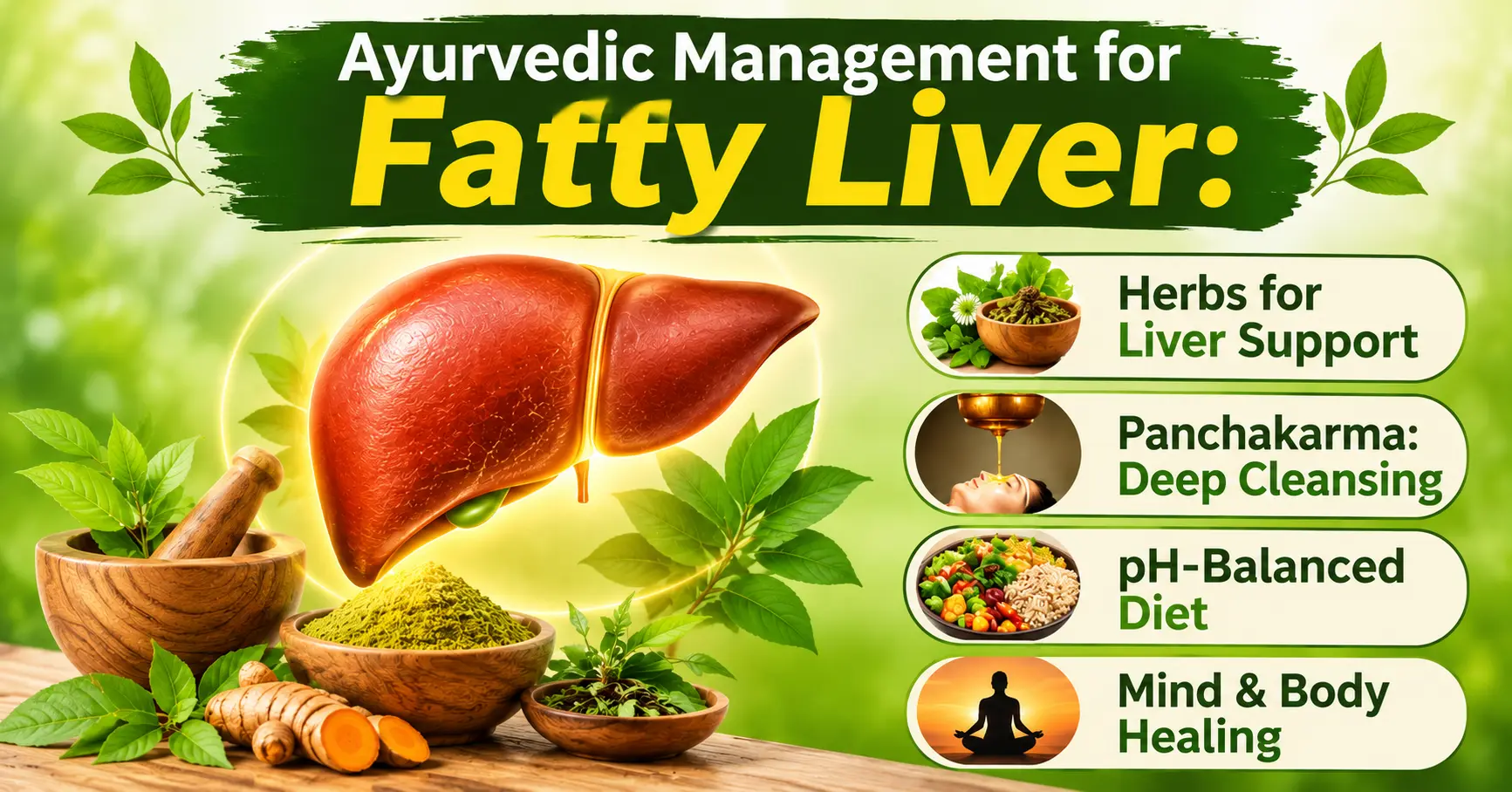
Ayurveda does not support the liver alone. Acharya Manish Ji builds his approach on four pillars: food, lifestyle, herbs, and therapies. Each pillar supports the others, so he supports them as one routine.
Many people in India search for fatty liver ka ayurvedic ilaj. His answer is a full routine, not a single remedy.
Early research looks encouraging. A 2022 case report from the National Institute of Ayurveda, Jaipur followed a 35-year-old man with stage II fatty liver disease. After two months of Ayurvedic care his follow-up scan showed no fat in the liver. His BMI also dropped from 30.2 to 24.7. However, this was a single case, and the results were encouraging.
Herbs for Liver Support
Herbs form a core part of Ayurvedic management for fatty liver. An Ayurvedic doctor chooses them based on your digestion and body type. Commonly used herbs include—
- Bhumi Amla: traditionally used to support liver cleansing
- Kutki: a bitter herb used to support bile flow and digestion
- Kalmegh: a bitter herb traditionally used to support the blood and liver
- Punarnava: used to support liver function and healthy fluid balance
- Turmeric: known for its anti-inflammatory and antioxidant qualities
- Aloe vera and Triphala: used to support digestion and regular bowel movements
Panchakarma: Deep Cleansing
Panchakarma is Ayurveda’s deep-cleansing system. Acharya Manish Ji suggests it once every six months or a year as part of a wellness routine. It includes five procedures:
- Vamana: therapeutic vomiting that clears excess Kapha
- Virechana: medicated purgation that clears excess Pitta
- Basti: a medicated enema that cleanses the colon and supports Vata
- Nasya: herbal oil or powder given through the nose to clear the head and neck
- Raktamokshana: a blood-cleansing procedure done in a controlled way
A trained practitioner decides which procedures suit you.
pH-Balanced Diet
Acharya Manish Ji teaches that raw fruits and vegetables keep the body’s internal balance steady. They also ease the load on digestion. Therefore, he suggests eating more fresh, raw food and less cooked and processed food.
His simple 7-day green kadha follows the same idea. It blends neem, mint, coriander, curry leaves, raw turmeric, and one seasonal fruit. He suggests one glass each morning for a week.
Mind & Body Healing
Stress and poor sleep slow down digestion. As a result, they also slow down healing. Acharya Manish Ji therefore pairs herbs with yoga, pranayama, and meditation.
A calm mind supports better digestion, mood, and sleep. In turn, a rested body supports a healthier liver.
Looking for guidance on Ayurvedic liver care? Connect with Acharya Manish Ji’s team.
Best Diet for Fatty Liver: What to Eat and What to Avoid
Ayurveda favours light, warm, freshly cooked food that is easy to digest. Modern nutrition agrees with this. So the best diet for fatty liver is simple, fresh, and regular.
Foods That Support the Liver
- Fresh fruits such as apples, papayas, and oranges
- Bitter gourd, bottle gourd, and spinach
- Millets like ragi, bajra, and jowar
- Moong dal and sprouts
- A handful of nuts and seeds
- Turmeric in daily cooking
These foods are light and rich in fibre. Therefore, they help digestion and keep you full for longer.
Foods to Limit
- Sugar, sweets, and sweet drinks
- Maida, bread, and bakery items
- Fried and oily snacks
- Packaged and ready-to-eat food
- Alcohol
These foods add extra fat and sugar. Over time, the liver has to store the excess.
Meal Timing and Portions
Eat at fixed times every day. Keep dinner light and early, ideally two to three hours before sleep. Also stop eating when you feel comfortably full. A steady routine gives your digestion time to rest.
How to Reduce Fatty Liver Naturally: Daily Habits That Matter
Diet alone is not enough. Acharya Manish Ji says that daily discipline shapes health more than occasional management. So these habits help if you want to know how to reduce fatty liver naturally:
- Sleep early and wake up early
- Avoid sleeping during the day
- Walk briskly for 30 minutes every day
- Do 10 to 12 rounds of Surya Namaskar in the morning
- Walk 100 steps after dinner
- Sit in Vajrasana for a few minutes after meals
- Practise pranayama and meditation daily
- Skip smoking and alcohol
Read more: Fatty Liver ke Lakshan Karan aur Ilaj
Acharya Manish Ji prefers light to moderate exercise over heavy workouts. Ayurvedic management for fatty liver works best when these habits stay steady.
When to Get Your Liver Checked
Fatty liver stays silent, so testing matters. An ultrasound and a liver function test show how your liver is doing. Get checked if you feel constant tiredness, bloating, or heaviness after meals. Likewise, get tested if you have diabetes, obesity, or high cholesterol. Want a daily routine that fits your body? Talk to our Ayurvedic experts.
Conclusion
Fatty liver builds up quietly, mostly through weak digestion and daily habits. Acharya Manish Ji explains it through Ama, Pitta, and Kapha. His Ayurvedic management for fatty liver rests on four pillars: food, lifestyle, herbs and therapies like Panchakarma. A light, fresh diet and steady daily habits support the liver.
Start your liver care the Ayurvedic way with Acharya Manish Ji. Book a consultation to connect with Acharya Manish Ji’s team today and receive a personalised plan.