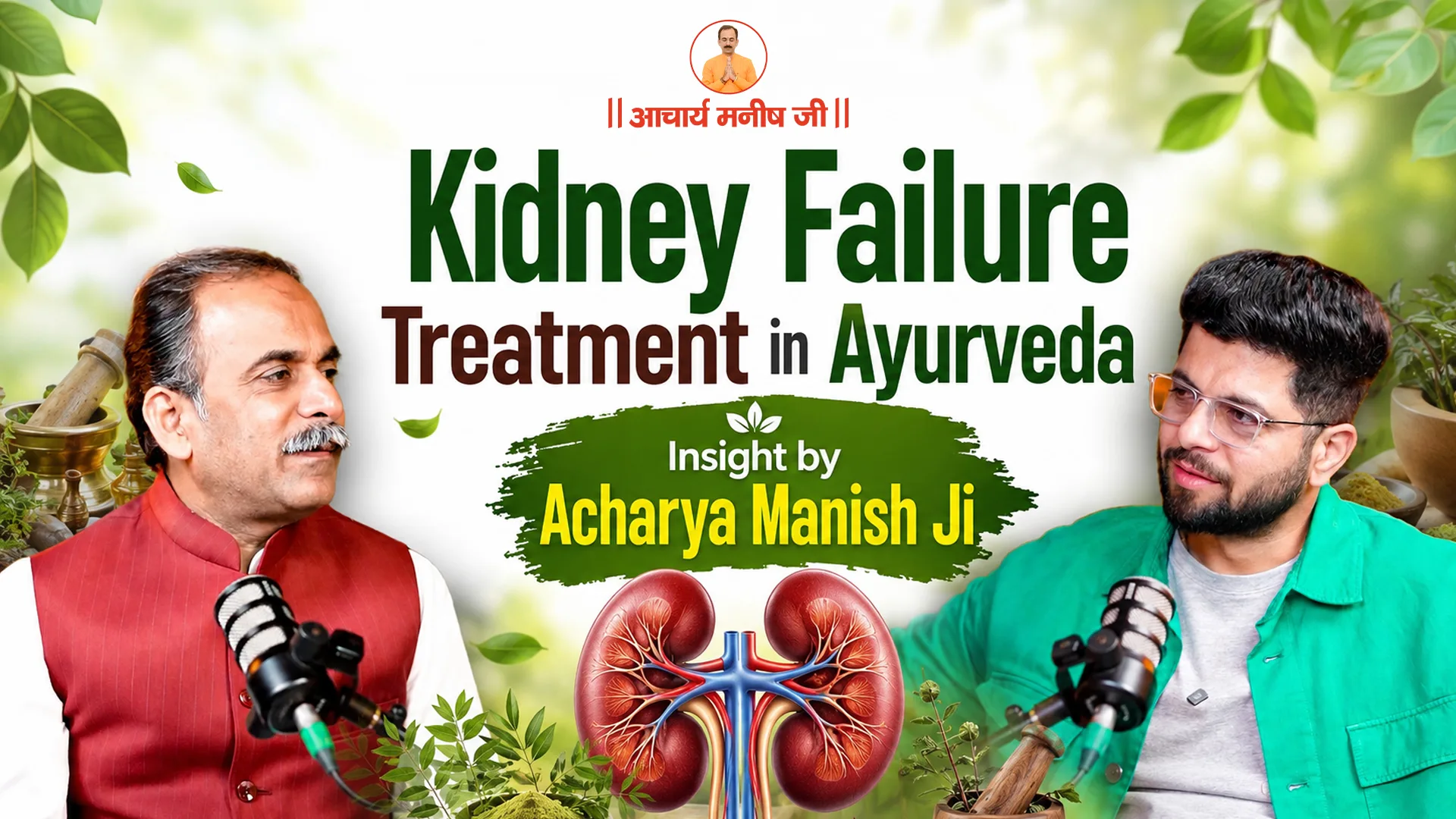
Every morning can bring a new worry for someone living with declining kidney function. Is the creatinine higher today? Will dialysis be needed again? Is the swelling getting worse? Can anything be done to support the kidneys? These questions can make everyday life stressful for both patients and their families.
Ayurveda is one approach many people explore for long-term kidney care. Acharya Manish Ji shares insights that focus on diet, lifestyle, traditional herbs and selected Ayurvedic therapies. The article is an exploration of his views on the kidney failure treatment, alongside a discussion about the significance of periodic kidney check-ups.
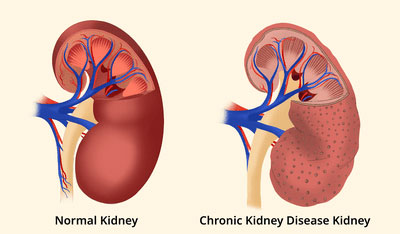
What Does Acharya Manish Ji Say About Kidney Failure?
This issue is discussed by Acharya Manish Ji, who mentions frequent urination at night as one of those changes which should not just be taken lightly. In this context, the issue is discussed from the point of view of Ayurveda in terms of how the body copes with waste management.
But it does not necessarily mean that the patient suffers from kidney failure. It can occur because of fluid intake, age, urinary conditions and several other health concerns.
The condition of the kidneys can only be understood properly through medical evaluation and relevant investigations. This is particularly important when a person already has high creatinine, reduced kidney function or other signs of kidney disease.
Can Ayurveda Support Kidney Health Without Dialysis?
A common search among patients is Kidney Failure Treatment Without Dialysis. The answer is not the same for every person.
Dialysis is used when the kidneys can no longer perform enough of their essential functions. Some people with kidney failure may require dialysis while depending on kidney functions and health of the patient. Dialysis should never be reduced or stopped without guidance from the treating healthcare team.
Ayurveda can be explored as a complementary approach focused on diet, lifestyle, herbs and personalised care. At Jeena Sikho HiiMS, an integrated approach may include Ayurvedic guidance and selected therapies based on an individual’s health condition.
The important point is to understand the patient’s present condition before deciding which form of care is appropriate.
Which Ayurvedic Herbs Are Used for Kidney Support?
Acharya Manish Ji in his discussion mentions some herbs used traditionally in Ayurvedic preparations for kidney and urinary wellness.
-
Kasni
Kasni seeds and leaves are included in the herbal combination discussed by Acharya Manish Ji. Traditionally, Kasni has been used in Ayurvedic preparations associated with liver and urinary health.
-
Makoy
Makoy is another herb mentioned in the formulation. Different parts of the plant have traditionally been used in Ayurvedic preparations.
-
Gokhru
Gokhru is traditionally associated with urinary health and is commonly found in Ayurvedic formulations intended to support normal urinary function.
-
Punarnava
Punarnava has a long history of use in Ayurveda and is traditionally associated with fluid balance and urinary wellness.
-
Neem and Peepal
Acharya Manish Ji also mentions neem leaves, neem fruit, peepal leaves and peepal bark as ingredients in the herbal combination discussed in his video.
People with kidney disease should not start herbs or herbal supplements on their own. Some products can interact with medicines or may not be suitable for people with reduced kidney function.
What Is the Role of Panchakarma and Ayurvedic Therapies?
Ayurveda often takes a broader approach that includes diet, routine, herbal preparations and therapies. In the approach discussed by Acharya Manish Ji, Panchakarma and selected therapies form part of this wider framework.
At Jeena Sikho HiiMS, therapies such as hot water immersion therapy and head-down tilt therapy are also included in its integrated approach to kidney care of GRAD System.
- Hot Water Immersion Therapy: At Jeena Sikho HiiMS (HWI) is a natural wellness treatment where a person sits in a tub of warm water heated to about 40°C to 42°C (104°F to 107.6°F) up to their chest or neck for 15 to 45 minutes.
- Head-Down Tilt Therapy: At Jeena Sikho HiiMS (HWT) is a postural technique where a patient lies on a specially designed bed tilted at a 10- to 15-degree angle with the head positioned lower than the feet.
The suitability of these therapies can differ from one person to another. Anyone with advanced kidney disease should receive professional guidance before undergoing a new therapy.
Can Diet and Lifestyle Support Long-Term Kidney Care?
Food and daily habits can have an important place in managing kidney health. However, there is no single diet suitable for every person with kidney disease. The nutritional requirements will vary based on how well the kidneys function, the medicines taken, whether one is undergoing dialysis treatment and other related diseases.
Some of the things that may form a personalised diet plan include the following:
- Restricting the consumption of processed and packaged foods
- Consumption of salts within the prescribed range
- Controlling high blood pressure and blood sugar
- Adherence to personal fluid intake guidelines
- Living a regular lifestyle
- Consuming prescribed medications
- Regular kidney examinations
These actions represent responsible and long-term care.
How to Treat Kidney Failure Naturally Without Ignoring Medical Care?
People Searching for How to Treat Kidney Failure Naturally, are often looking for herbs, diet changes and other natural options.
Natural care should not mean replacing necessary medical treatment. When one suffers from kidney failure, the situation could be severe since waste products and extra fluids accumulate in the body due to poor functioning of the kidney. In some cases, the possible treatment may be through dialysis, kidney transplantation or conservative care.
Thus, it can also be helpful to opt for the Ayurvedic kidney treatment as one of the health management strategies, especially when done by professionals.
Why Is Regular Kidney Monitoring Important?
Kidney function cannot be judged only by how a person feels. Some people may have significant kidney problems with few noticeable symptoms.
Tests including serum creatinine and estimated kidney function assist health care practitioners in evaluating how efficiently the kidneys are functioning. Other tests may be advised depending on the person’s condition.
Regular monitoring also helps identify changes early and allows the care plan to be reviewed when required.
Conclusion
Continuous care is needed in the case of kidney failure. Apart from monitoring, one can try different means to improve their overall wellness. The viewpoint of Acharya Manish Ji on Ayurveda emphasises the use of herbs, diet, lifestyle, and selected therapy.
Jeena Sikho HiiMS adopts a holistic approach wherein the health needs of the individual are taken into consideration for planning care. In the case of Ayurvedic kidney treatment, one should consult a professional. Contact us today for consultation can also help you discuss your reports and understand the next appropriate step.

FAQs
Q1. Is it possible to treat kidney failure using Ayurveda?
Ans. Ayurveda can be seen as a complementary form of therapy that involves the use of diet, lifestyle and certain herbs or treatments.
Q2. Is it possible to treat kidney failure without dialysis?
Ans. While some individuals having kidney failure receive conservative therapy without dialysis or transplantation, those who need dialysis cannot discontinue their treatment on their own.
Q3. What are the names of some Ayurvedic herbs used for kidneys?
Ans. The herbs that Acharya Manish Ji mentions in relation to kidney care include Kasni, Makoy, Gokhru, Punarnava, Neem and Peepal.
Q4. What is the view of Acharya Manish Ji on kidney care?
Ans. Kidney care according to Acharya Manish Ji involves the use of herbs, diet modification, lifestyle and Ayurvedic treatments.
Q5. How can the diet and lifestyle affect people with kidney disease?
Ans. The diet and lifestyle are important factors in kidney care, though individual recommendations are needed depending on the level of kidney functioning.