

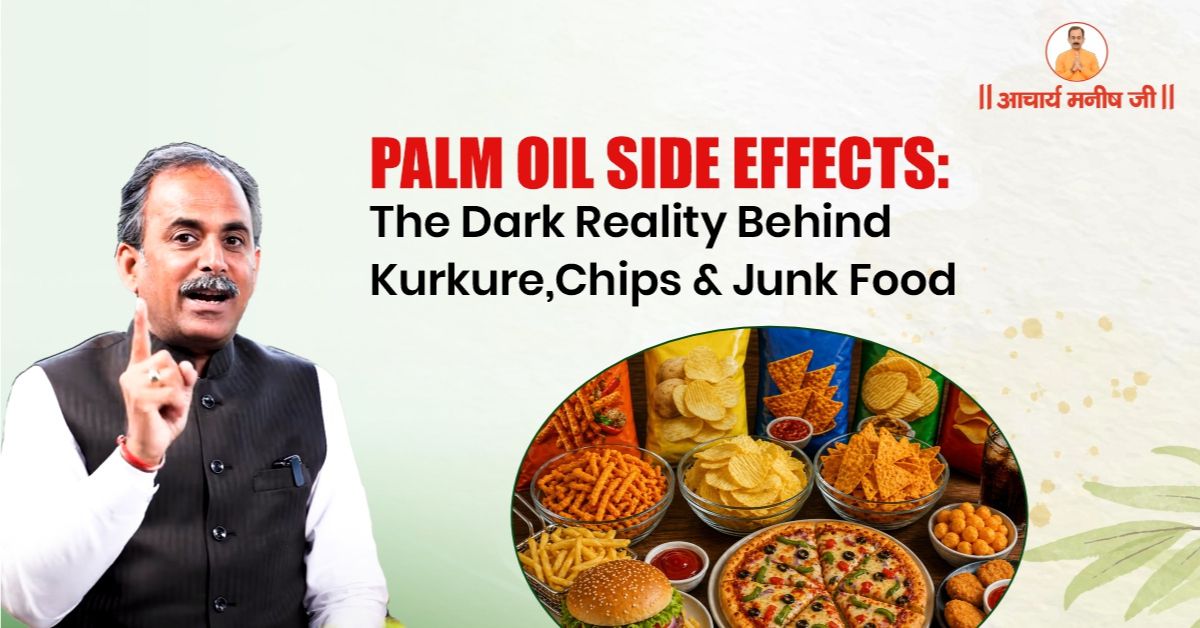
In today’s fast-paced lifestyle, snacks like Kurkure, chips, biscuits, and other junk foods have become a daily habit for many people—especially children and youth. While these foods are tasty and convenient, very few people pay attention to what goes inside them. One of the most common ingredients in these processed foods is palm oil, a cheap and widely used cooking oil.
But the real question is—how safe is palm oil for your health? Let’s uncover the truth behind Palm Oil Side Effects and understand why excessive consumption of junk food can silently harm your body.
What is Palm Oil and Why is it Used in Junk Food?

Palm oil is extracted from the fruit of oil palm trees and is widely used in processed foods due to its low cost, long shelf life, and stability at high temperatures.
You’ll find palm oil in:
- Kurkure and namkeen snacks
- Potato chips
- Biscuits and cookies
- Instant noodles
- Packaged sweets and bakery items
Food companies prefer palm oil because it enhances taste and texture while keeping production costs low.
Palm Oil Side Effects on Health
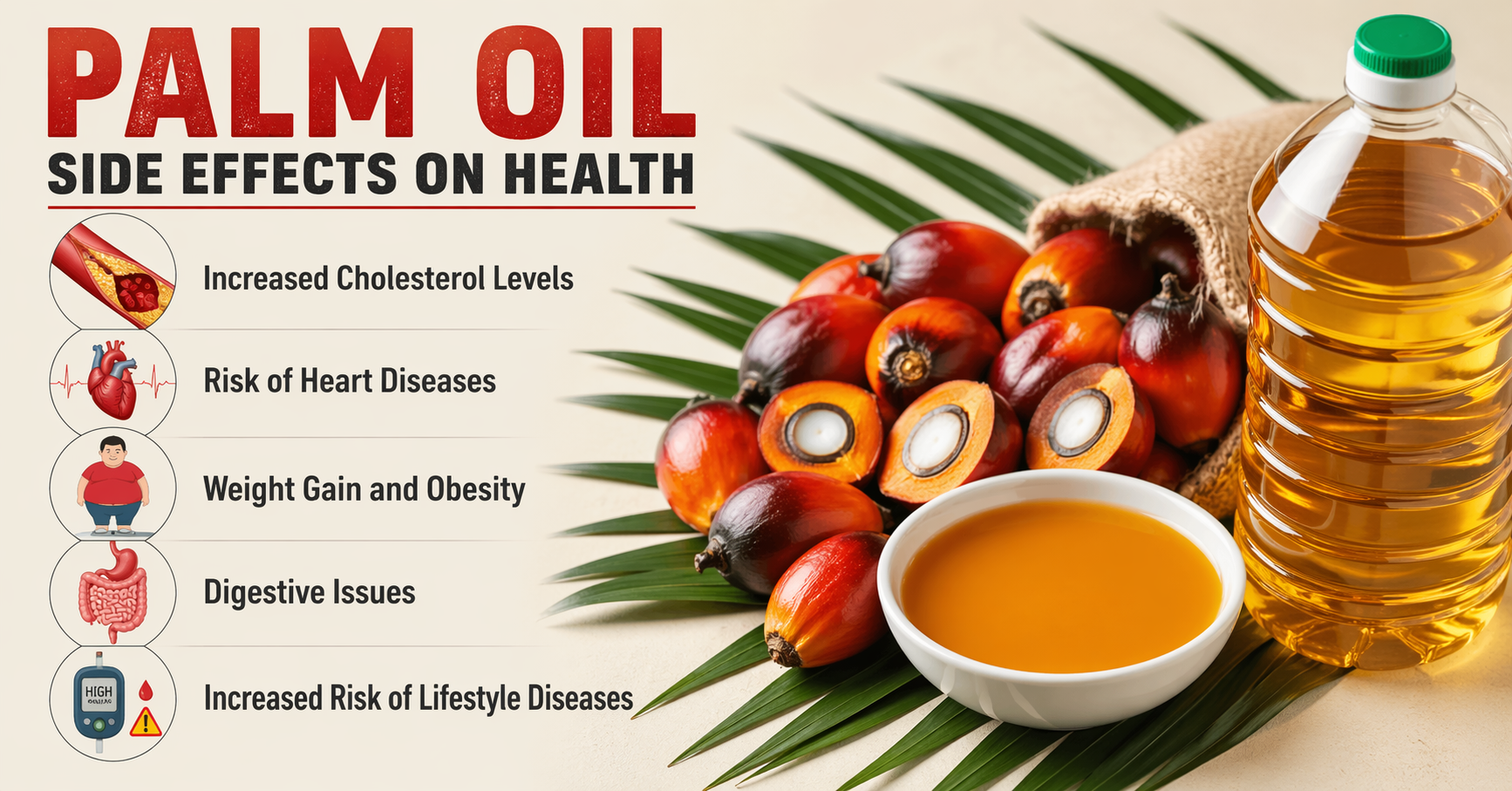
While palm oil is not toxic when consumed in moderation, excessive intake—especially through junk food—can lead to several health issues.
1. Increased Cholesterol Levels
One of the major Palm Oil Side Effects is its high saturated fat content. Excess consumption may raise LDL (bad cholesterol), increasing the risk of heart disease.
2. Risk of Heart Diseases
Diets rich in saturated fats are linked to cardiovascular problems. Regular intake of palm oil-based junk foods can contribute to long-term heart complications.
3. Weight Gain and Obesity
Junk foods like chips and Kurkure are not just high in palm oil—they are also deep-fried and calorie-dense. This combination leads to:
- Rapid weight gain
- Increased belly fat
- Sluggish metabolism
4. Digestive Issues
Frequent consumption of fried snacks can disturb digestion, leading to:
- Acidity
- Bloating
- Constipation
5. Increased Risk of Lifestyle Diseases
Over time, excessive junk food consumption may increase the risk of:
- Diabetes
- Fatty liver
- High blood pressure
Palm Oil Side Effects in Kurkure, Chips & Processed Snacks
Let’s be clear—palm oil alone is not always the only problem. The real danger lies in how it is used in junk food.
Snacks like chips and Kurkure are:
- Deep-fried at high temperatures
- Loaded with salt and additives
- Consumed frequently in large quantities
Experts point out that the overall processing, high fat, and sodium content are major contributors to health risks, not just palm oil alone.
Still, when palm oil is consumed repeatedly in such forms, its negative effects can accumulate in the body.
Hidden Truth: Why Palm Oil is So Common in Junk Food
Palm oil is used in nearly half of packaged consumer products worldwide.
Reasons include:
- Cheap production cost
- Longer shelf life
- Ability to enhance flavor
- Easy availability
However, this convenience comes at a cost—your health.
What Does Acharya Manish Ji Say About Junk Food?
According to Acharya Manish Ji, modern lifestyle diseases are largely caused by processed and chemical-rich foods. He emphasizes:
- Avoid packaged snacks and junk food
- Choose natural, home-cooked meals
- Follow Ayurveda-based eating habits
Acharya Manish Ji believes that the body thrives on natural, sattvic food, not industrially processed items loaded with unhealthy oils and preservatives.
By reducing junk food intake, you can protect your body from many hidden health risks associated with Palm Oil Side Effects.
Palm Oil Side Effects vs Reality: Is It Completely Harmful?
It’s important to maintain a balanced view.
Scientific research suggests:
- Palm oil in moderate amounts may not pose serious health risks
- It even contains some antioxidants like vitamin E in its natural form
However, the problem arises when:
- It is refined and processed
- Used repeatedly for frying
- Consumed through junk food daily
So, the issue is not just palm oil—but how and how much you consume it.
How to Reduce Palm Oil Intake in Daily Life
Here are some practical tips:
1. Read Food Labels
Check ingredients before buying packaged food. Avoid products listing palm oil or palmolein.
2. Limit Junk Food
Reduce consumption of chips, Kurkure, and fried snacks.
3. Choose Healthy Oils
Use oils like:
- Mustard oil
- Coconut oil
- Desi ghee (in moderation)
4. Eat Fresh & Homemade Food
Home-cooked meals are always safer and healthier.
5. Follow Ayurvedic Lifestyle
As suggested by Acharya Manish Ji, adopt natural eating habits for long-term wellness.
Conclusion
The growing consumption of junk food has made Palm Oil Side Effects a serious health concern. While palm oil itself may not be extremely harmful in moderation, its excessive use in processed and fried foods makes it risky.
Snacks like Kurkure and chips may satisfy your taste buds temporarily, but they can silently impact your health over time.
By making conscious dietary choices and following natural wellness principles, you can protect yourself and your family from long-term health issues. For more information click here:

Frequently Asked Questions (FAQs)
Q1. What are the main Palm Oil Side Effects?
Ans. The main side effects include increased cholesterol, weight gain, heart risks, and digestive issues when consumed in excess.
Q2. Is palm oil in chips harmful?
Ans. Palm oil itself is not the only issue. Chips are unhealthy mainly due to deep frying, high fat, and salt content.
Q3. Can I consume palm oil in moderation?
Ans. Yes, moderate consumption is generally considered safe, but regular intake through junk food should be avoided.
Q4. Why is palm oil used in Kurkure and snacks?
Ans. Because it is cheap, stable at high temperatures, and increases shelf life.
Q5. What is the healthier alternative to palm oil?
Ans. Healthier options include mustard oil, coconut oil, and desi ghee when used in moderation.
