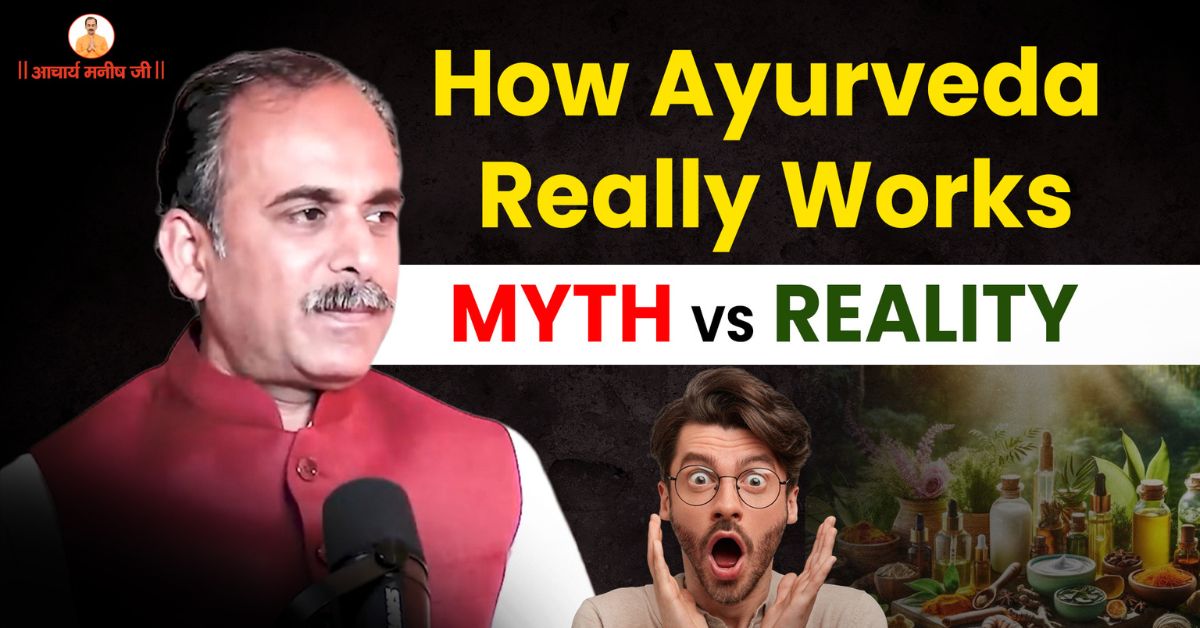

Is Ayurveda scientific or a myth? In today’s fast medical world, Ayurveda is often misunderstood. Many people believe it is only about herbs or minor treatments and that it takes too much time to show results. Ayurveda is misunderstood because people do not understand it as a full life system. Truth about Ayurveda means knowledge of life. It explains how to stay healthy and live in balance while managing illness.
The Vedas and Bhagavad Gita say that health comes from balance. It means eating healthy food, staying active, getting proper sleep, and keeping the mind positive. According to Acharya Manish Ji, Ayurveda is closely connected to the law of karma. What we eat, think, and do every day directly affects our health.
Unlike medical systems that treat disease after it starts, Ayurveda focuses on prevention. It improves digestion, cleanses the body from within, calms the mind, and builds disciplined daily habits.
This blog aims to clear common Ayurveda myths vs. reality, explain how it truly works, and show how it supports long-term health and disease prevention in a practical way.
Ayurveda as a Complete Science of Life
Acharya Manish Ji explains that Ayurveda is much more than a treatment method. It is a complete science of life. While modern medicine mainly focuses on diagnosing and treating diseases, Ayurveda focuses on understanding why diseases start in the first place.
Ayurveda studies human life from before birth to old age. It looks at physical health, mental condition, digestion, metabolism, emotions, and daily habits. It teaches that good health depends on how we live every day.
Ancient Indian texts placed health at the center of human life. In many other civilizations, health was never a main topic in religious or philosophical writings. The Bhagavad Gita teaches moderation in eating, working, resting, and sleeping as the foundation of balance and well-being. The truth about Ayurveda follows the same idea and says that disease begins when this balance is disturbed.
According to Ayurveda, proper digestion, known as Agni, is the base of good health. Eating healthy food alone is not enough. What matters is whether the body can digest and absorb it properly. Poor digestion leads to the buildup of toxins known as “Ama,” which later results in health problems. To prevent this, Ayurveda begins treatment by strengthening digestion and improving daily routines. Ayurveda looks at diet and daily habits first, then focuses on physical symptoms. This way, it not only treats illness but also prevents it and helps the body recover naturally.
The Five Core Pillars of True Ayurveda
According to Acharya Manish Ji, Ayurveda shows its real effects only when all its parts work together. Just following food or medicine does not give full results.
Aahar (Diet): Ayurveda advises eating food that suits your body and digestion. Meals should nourish the body without putting extra pressure on it. Overeating, wrong food combinations, or skipping meals can upset balance.
Vihar (Lifestyle): Daily routines aligned with nature—waking early, sleeping on time, regular physical movement, and controlled screen exposure—are essential. Lifestyle imbalance is one of the main reasons behind many modern health problems.
Shaman (Alleviation): Herbal medicines are used to balance Vata, Pitta, and Kapha in the body. Medicines are selected based on individual constitution, not just disease name.
Shodhan (Detoxification): Panchakarma therapies help remove deep-rooted toxins that block healing. Detox is not optional but necessary when chronic illness is present.
Vishwas (Faith): Mental attitude plays a powerful role in healing. According to Ayurveda, stress and negative emotions delay recovery, while positivity and confidence help the body heal better. When everything is followed properly, Ayurveda works much better.
Ayurveda Myths vs Reality
- Myths about Ayurveda 1: Ayurveda works very slowly
Reality: Ayurveda focuses on fixing the real cause of the problem. Some relief may come early, but full healing takes time. This gradual approach gives longer-lasting results. - Myths about Ayurveda 2: Ayurveda is only for old people
Reality: Ayurveda focuses on fixing the real cause of the problem. Some relief may come early, but full healing takes time. - Myths about Ayurveda 3: Ayurveda cannot help in major illnesses
Reality: Ayurveda has been used in many long-term health problems. Acharya Manish Ji says it supports kidney, liver, and metabolic health and also helps during cancer treatment by strengthening the body. - Myths about Ayurveda 4: Ayurveda depends only on herbs
Reality: It also includes balanced diet, good lifestyle habits, mental peace, and detox practices. - Myths about Ayurveda 5: Ayurveda is not scientific
Reality: Ayurveda is officially recognised by the Ministry of AYUSH. It has proper education systems, research, and clinical practice.
Root-Cause Healing and Detoxification Approach
Acharya Manish Ji strongly criticizes the “Drug and Disease” cycle, where medicines manage symptoms without correcting the cause. Ayurveda considers toxins called Ama as the main cause of many diseases. These toxins build up because of weak digestion, stress, irregular routines, and unhealthy eating habits. The Shuddhi or purification approach focuses on removing this waste so that natural healing can start.
Panchakarma therapies cleanse organs, improve metabolism, and support tissue repair. When toxins are removed, the body regains its self-healing capacity. The condition of the mind directly affects the health of the body. Ayurveda understands that long-term stress, fear, and emotional pressure weaken immunity and slow healing.
Conclusion
Ayurveda gives the best results when followed as a complete system, not in parts. It works on improving digestion, cleansing the body, calming the mind, and bringing lifestyle in harmony with nature. According to Acharya Manish Ji, being healthy means bringing the body and mind into balance, not just managing illness.
Correctly guided Ayurveda can support gradual recovery and reduce the risk of future health concerns. For guidance and information about Ayurveda myths vs. reality, call +91 82704 82704 or email care@jeenasikho.com.
FAQs
Q1. Is Ayurveda only about medicines?
Ans. Ayurveda includes diet, lifestyle, detoxification, mental balance, and medicines.
Q2. Can Ayurveda help chronic diseases?
Ans. It helps correct the root cause, supports body cleansing, and strengthens immunity.
Q3. What is Panchakarma?
Ans. A detox process that removes toxins and restores internal balance.
Q4. Does diet really matter in Ayurveda?
Ans. A digestion-based diet is central to healing.
Q5. Who is Acharya Manish Ji?
Ans. He is the founder of Jeena Sikho HiiMS and a leading advocate of root-cause Ayurvedic healing.